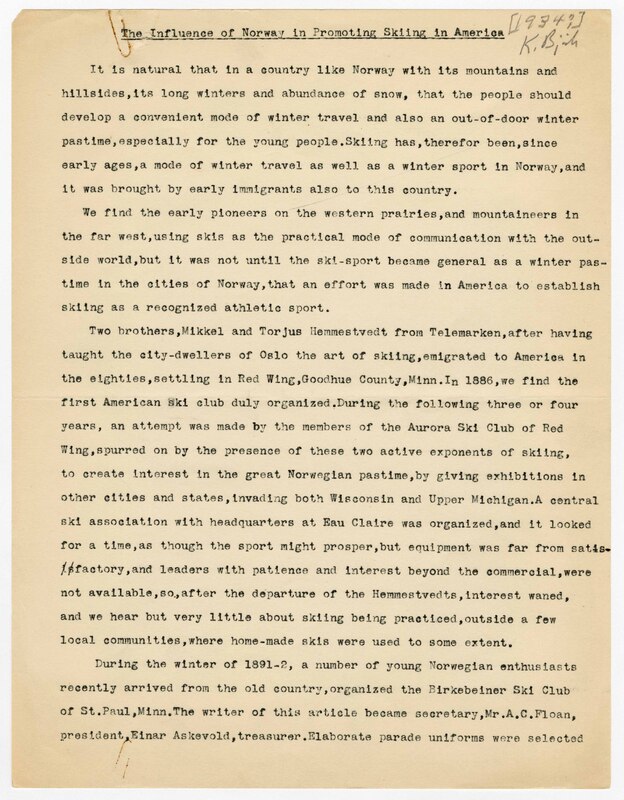
The Influence of Norway in Promoting Skiing in America and "Norwegian National Sports and Their Influence in the U.S. and Canada: Written for the Norse American Centennial Celebration 1925 by A. H. Holter." Holter was a Norwegian-born merchant from Ashland, Wisconsin, and an organizer and officer of the National Ski Association of America.
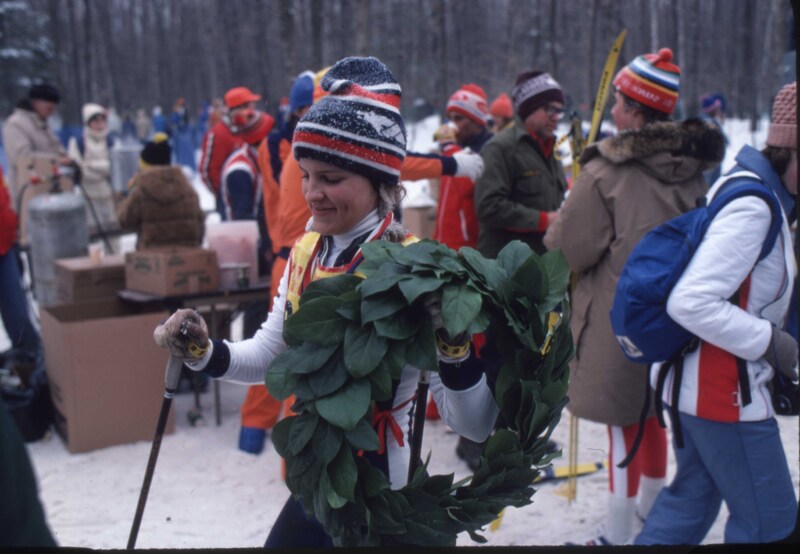
The American Birkebeiner was started in 1973 by Tony Wise, a founding member of the Worldloppet federation of cross-country ski marathons. The race is held in February in Hayward, WI. Wise drew on his Norwegian heritage in starting a race named after a famous event in Norway. The American Birkebeiner, also called Birke, is named after Norwegian Birkebeinerrennet. This race commemorates an important historical event when in 1206 a group of Birkebeiner party soldiers, who fought for Sverre Sigurdsson and his descendants in the Norwegian civil war, smuggled the illegitimate son of Norway's King Håkon Sverresson from Lillehammer to safety in Trondheim.
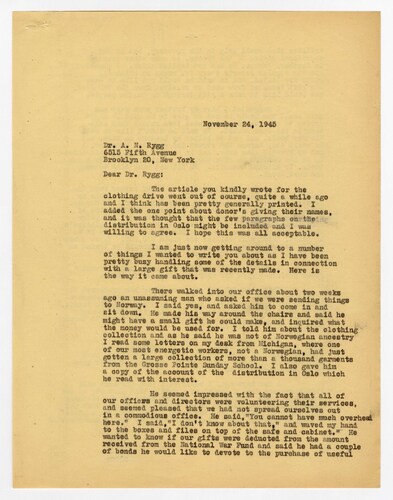
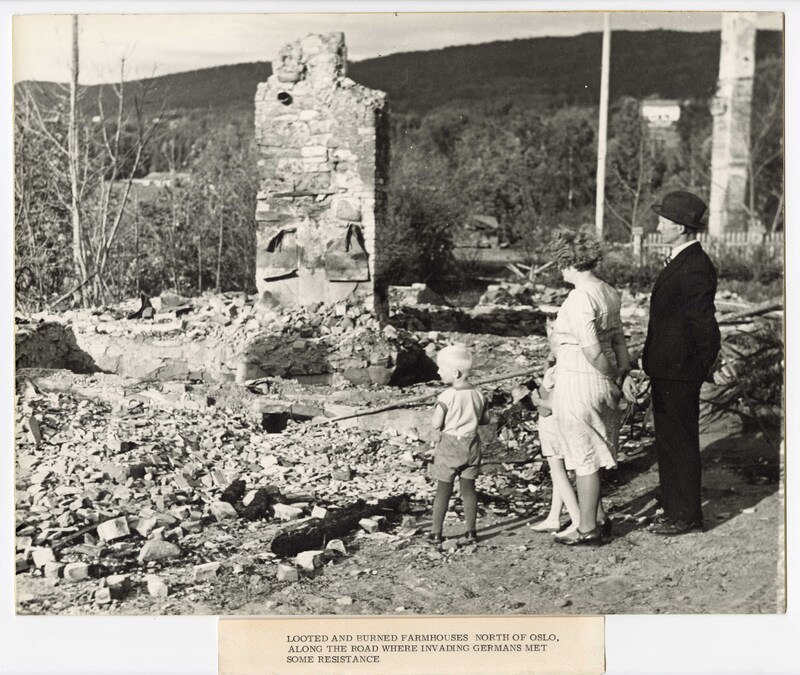
Founded in 1940 immediately after Nazi Germany's invasion of Norway, American Relief for Norway, Inc. (first named Norwegian Relief, Inc.) was the largest Norwegian-American relief organization in operation during World War II. With a mission to relieve distress among the people of Norway, activities included fundraising, clothing drives, food shipments, publicity, and participation with other aid groups and initiatives.
Funding to digitize a portion of the American Relief for Norway, Inc. Papers provided to NAHA through the Minnesota Arts and Cultural Heritage Fund, a component of the Minnesota Clean Water, Land and Legacy constitutional amendment, ratified by Minnesota voters in 2008.
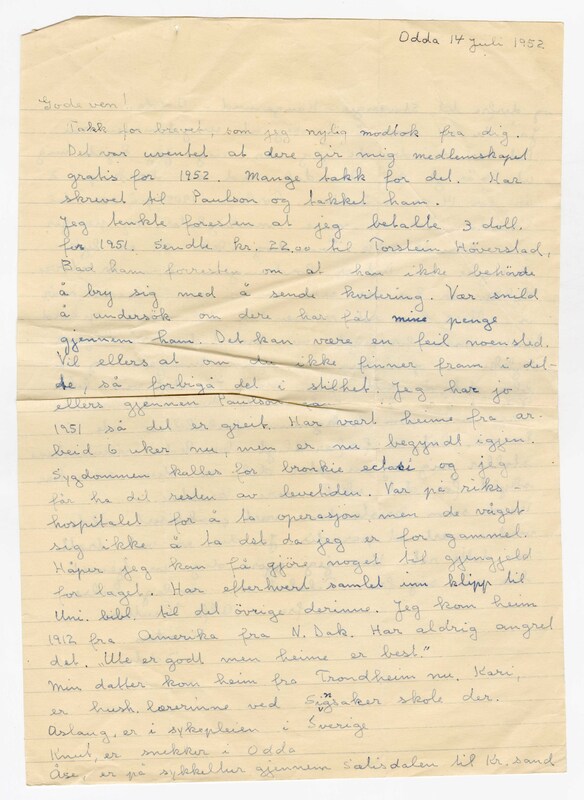
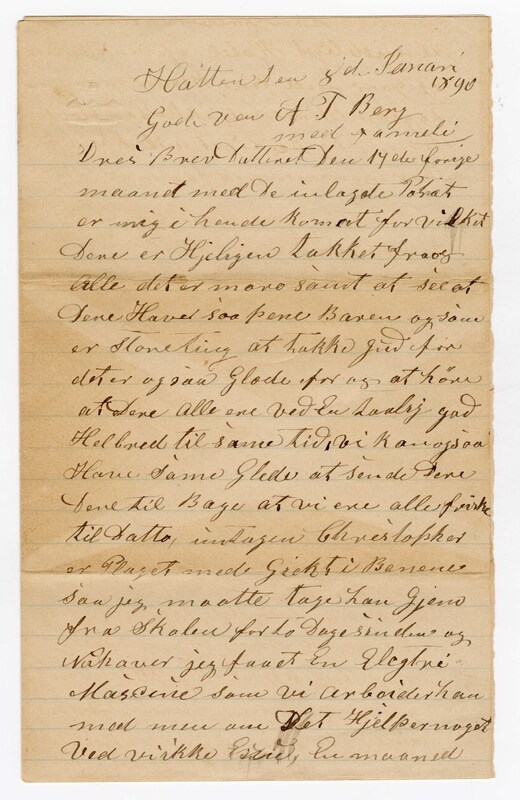
Letters to a Norwegian-born farmer at Sunburgh, Minnesota. Correspondents include Thorstein Berg, Johannes Halvorson, Bjug A. Harstad, T. T. Kopseng, T. P. Satner, and Johannes Tingelstad. All in Norwegian.
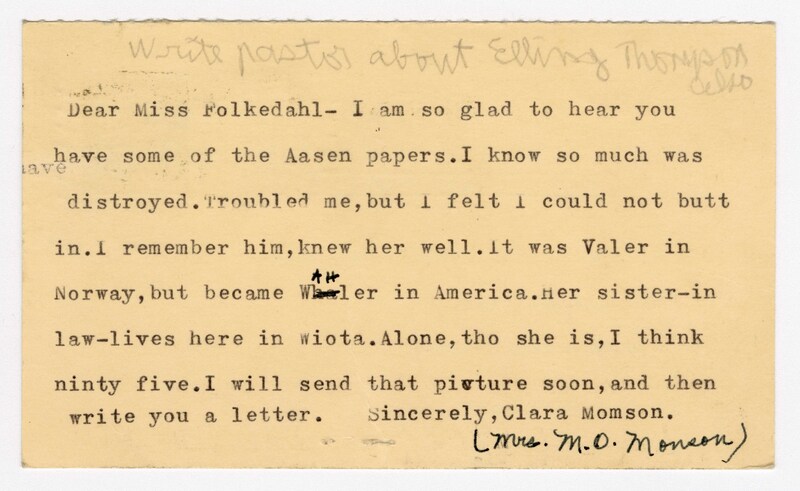
Mainly correspondence of a Norwegian-born farmer in Wiota, La Fayette County, Wisconsin. The letters, written by relatives and friends from California, Iowa, Nevada, Illinois, Minnesota, South Dakota, and Wisconsin, present a picture of the migration movement in its various aspects in both country and town. There are also letters by a student at Mount Horeb Academy (1895-1896).
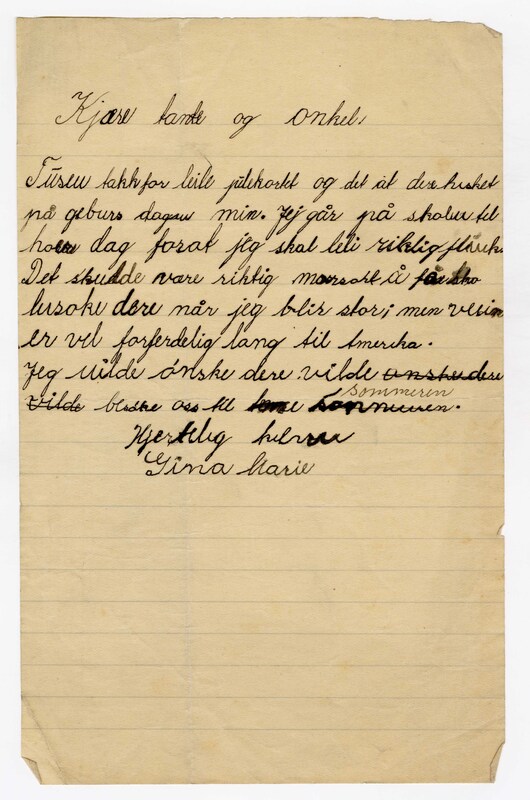
Correspondence of a Norwegian-born teacher and sheep rancher written mostly from Montana, Minnesota, and Wisconsin, dealing with health, rural schools, politics, and economic conditions on farm and ranch. There are letters concerning St. Olaf College, Augsburg College, Concordia College, Augustana Academy, and Scandinavia Academy. Tollefson was a student at St. Olaf College (1890-1893). Includes letters from Sam Solberg, Edwin Solberg, Inga Halverson, Lottie Halverson, O. Sandness, L.H. Dalen, Henry Thorseson, John Edward Beum.
The catalog record for the Andrew Tollefson collection can be found online here.
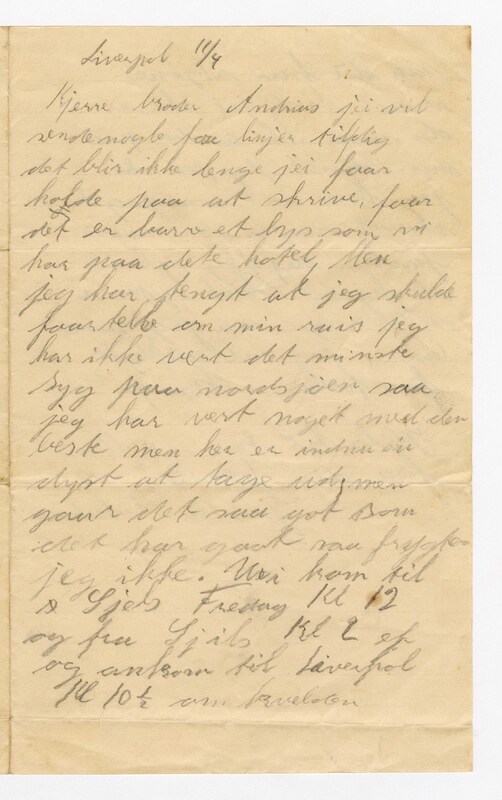
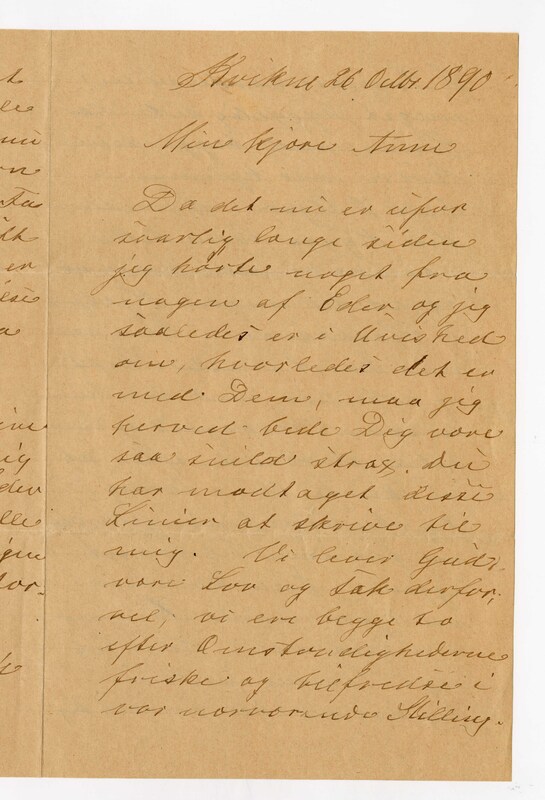
An emigration document and letters (mainly from Kvikne, Tynset, Hedmark, 1883-1890) to Mrs. Dahlby, a Norwegian-born farmer's wife at Mount Horeb, Wisconsin.
August Reymert was born on October 4, 1851 in Vågå, Norway. He died on May 31, 1932 in Long Island, New York, United States. He was the son of Theodor DeNoon Reymert and Anne Malene Beer. August was a lawyer in New York City, and served as president of the Norwegian-American Chamber of Commerce in New York. August Reymert was the lawyer and legal representative of Ole Herman Krag and Erik Jørgensen who were the developers of the Krag-Jørgensen rifle. This rifle was the standard rifle of the American Army in 1892. Reymert was also a founder of the Scandinavian Seamen's Home in New York and of the Norwegian hospital in Brooklyn. He was named Knight, First Class, of the Order of St. Olav and was decorated with the Vasa Order.
James Denoon Reymert(1821-1889), an American newspaper editor, mine operator, lawyer and politician. He was a pioneer settler near Muskego, and was an editor of the first Norwegian-American newspaper, Nordlyset. James Reymert was August Reymert’s uncle.
The catalog record to the August Reymert papers can be found online here.
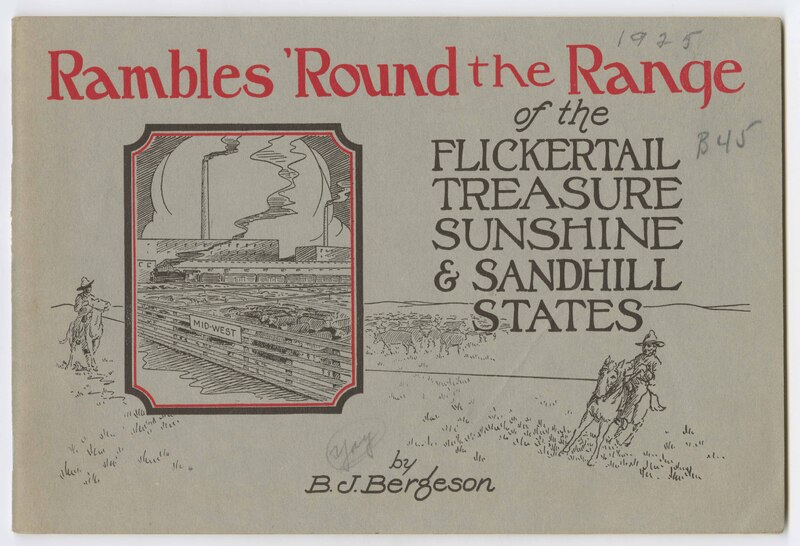
Select materials from the Berges Julius Bergeson papers (P0037) housed at the NAHA Archives. Bergson was the founder of the Mid-west Livestock Commission Company, Sioux City, Iowa. Portions of "Rambles 'Round the Range of the Sunshine, Sandhill and Treasure States" was digitized because it includes a description of their visit to the Norse-American Centennial in June 1925.
Papers of "bygd" societies and their Common Council ("Bygdelagenes Fellesraad"), clippings, constitutions, correspondence, minutes and financial records, pamphlets, pictures, programs, and reports, dealing with conventions, officers, special projects, and the Norse-American Centennial of 1925. The bygdelag, organized around the turn of the century, are societies based on regional origins in Norway. They were active in the Eidsvoll Centennial in 1914 and the Norse-American Centennial in 1925. While activity dropped off after the beginning of World War II, a revival began in the 1980s as a result of renewal of ethnic interest, and with emphasis on family history. Odd S. Lovoll's "A Folk Epic; The Bygdelag in America" (NAHA, 1975), which includes a. bibliography of lag publications.
The finding aid to the Bygdelagenes papers can be found online here.
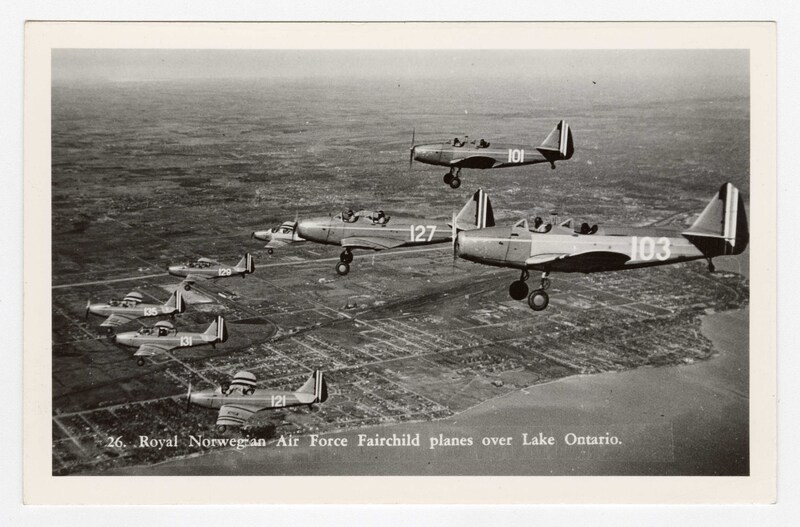
Founded in 1941 by Norwegian-Americans in Minneapolis, the Camp Little Norway Association, Inc. supported Norwegian armed forces, civilians, and nationals in North America during and after World War II through fundraising for medical care, food, housing, clothing, recreation, and especially aid to Camp Little Norway and the Norwegian Merchant Marine.
Funding to digitize the Camp Little Norway Association papers was provided by the National Endowment for the Humanities.
Campbell Norsgaard, a Norwegian-born photographer and cinematographer who later lived in Connecticut, served as the official photographer for the Royal Norwegian Air Force during World War II, documenting servicemen, aircraft, the Royal Family, training facilities, and international operations, before later producing nature films for the National Geographic Society. His collection includes color slides, transparencies, and black-and-white negatives from Canada, India, Norway, England, and beyond, featuring aerial views, portraits, wartime activities, the return of King Haakon VII, and Sigrid Undset’s travels, as well as signed pilot portraits; it also contains nineteen 16mm films (1942–1946) depicting Camp Little Norway, the Royal Family, the RNAF, and postwar events in Norway and Russia.
Carl Gustav Otto Hansen was born on March 16, 1871, in Trondheim, Norway, and emigrated to the United States with his mother and siblings in 1881, first settling in Walnut Grove, Minnesota, and later Minneapolis. Largely self-educated, he briefly studied at Augsburg Seminary and worked in printing before beginning a long career in journalism. From 1897 to 1935 he wrote and edited for Minneapolis Daglig Tidende, later working for Skandinaven in Chicago and then serving as editor and educational director for the Sons of Norway magazine. Hansen was also an active musician and choir leader, a founder of several Norwegian-American organizations, and the author of My Minneapolis (1956). He married Amalie Marie Edsten, and they had four children.
Select materials from the Carl O. Pedersen papers (P0303) housed in the NAHA Archives. Pedersen served as pastor of congregations and rector of the Lutheran Medical Center (Norwegian Lutheran Deaconesses' Home and Hospital (1919-1949) in the New York City metropolitan area. In 1933 he was named Knight, First Class, and in 1948, Commander of the Order of St. Olav. He received the St. Olav Medal in 1939.
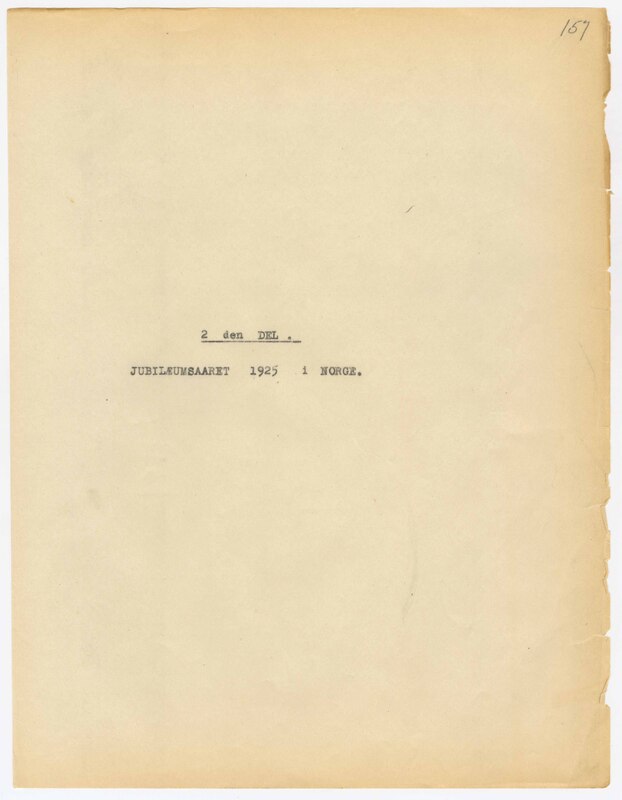
The digitized manuscript deals with the observance of the Norse-American Centennial in the United States and in Norway.
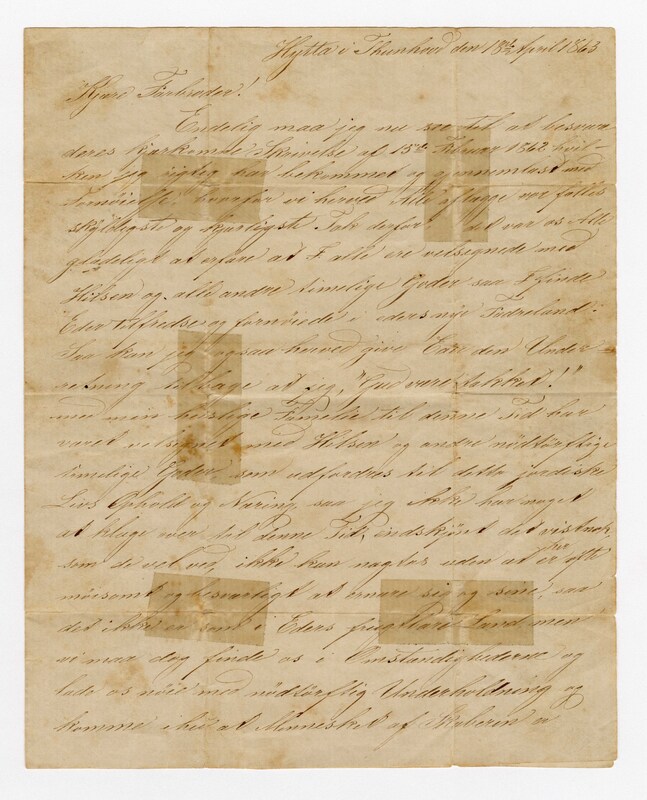
Letter (April 18, 1863) from a Thunhovd, (Buskerud) Norway, resident to his "farbroder" Knudt Synstegaard, Orfordville, Wisconsin, concerning weather, health, farming, and an inquiry about the Civil War.
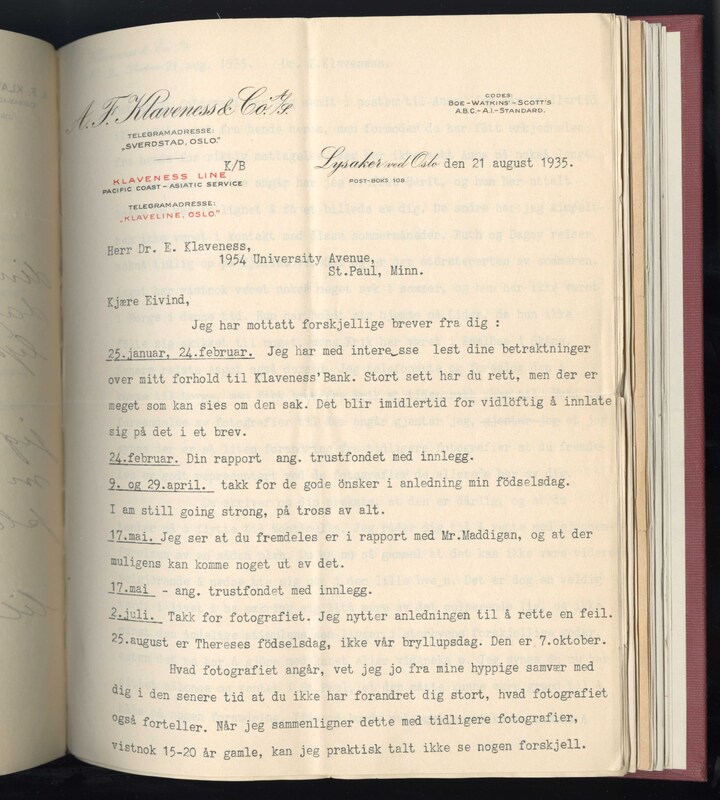
Eivind Klaveness was a Norwegian-born physician, writer and lecturer; he practiced in Brookings, Sioux Falls, South Dakota, as well as in Minneapolis and St. Paul, Minnesota. He held many offices: president of Vestfoldlag, of the Minnesota Leif Eriksen Monument Association, of the Scandinavian Republican State League of South Dakota, and was medical director of Sons of Norway and of the Surety Fund Life Company. He founded the Klaveness Corporation (investment bankers representing Klaveness Bank in Oslo); wrote two books, The Enchanted Islands (1939) and Norske læger i Amerika 1840-1942 (1943). He was a frequent radio and after dinner speaker; and was an equally frequent contributor of articles on medicine and politics to newspapers and journals. His correspondence with Richard Olsen Richards of the Richards Trust Company of Huron, South Dakota (3 volumes), reflects the story of that state's politics during the first three decades of the 20th century.
View the finding aid to the Eivind Klaveness papers here.
From the Knut Gjerset papers on women and Norwegian American Encyclopedia.
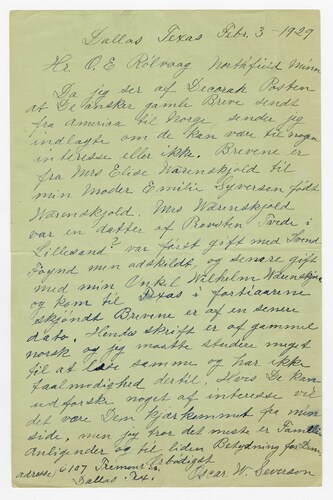
Letters and other writings regarding Wilhelm and Elise Waerenskjold. A pastor's daughter, Elise lead a party emigrating to Texas between October 1846 and March 1847. The Waerenskjolds married in 1848, settling at Four Mile Prairie. Her letters and other writings serve as a primary source of information about the Norwegians who settled in Texas.