
Knitting for Freedom: Women’s Aid for Occupied Norway
Support from Chicago
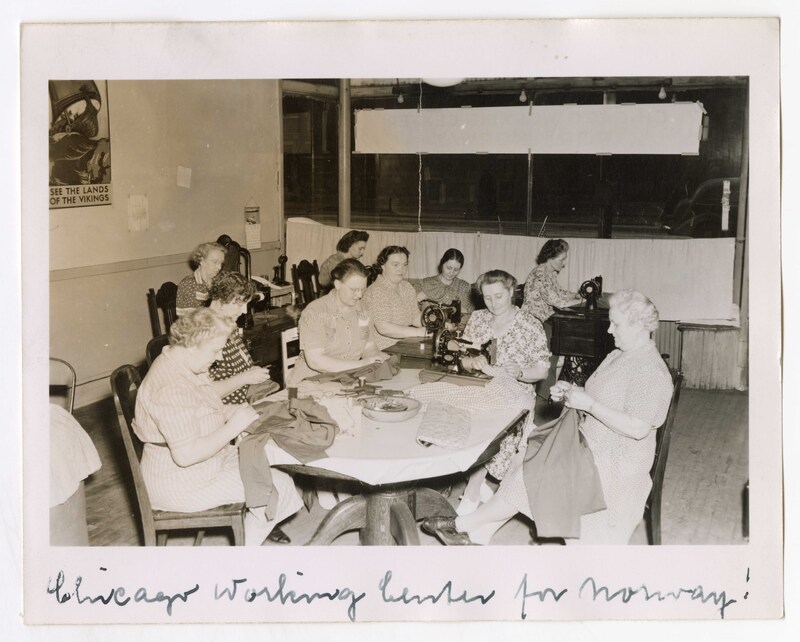
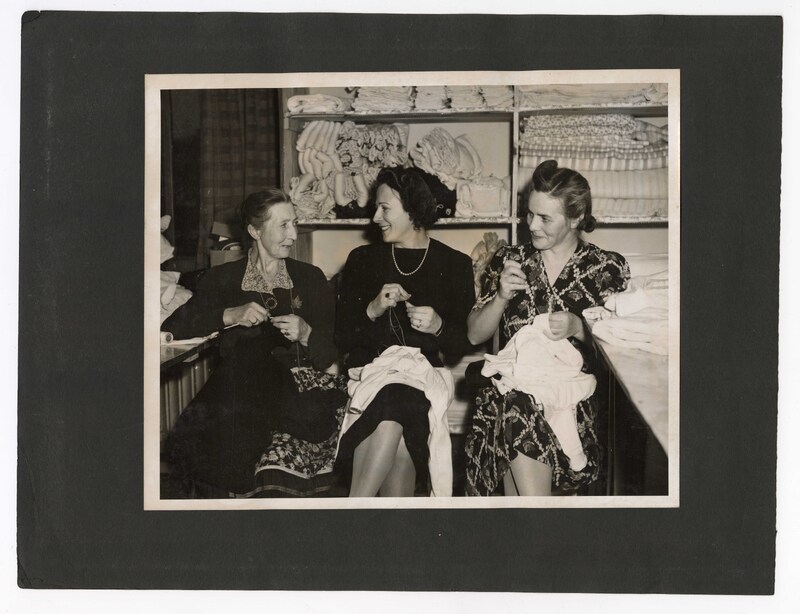
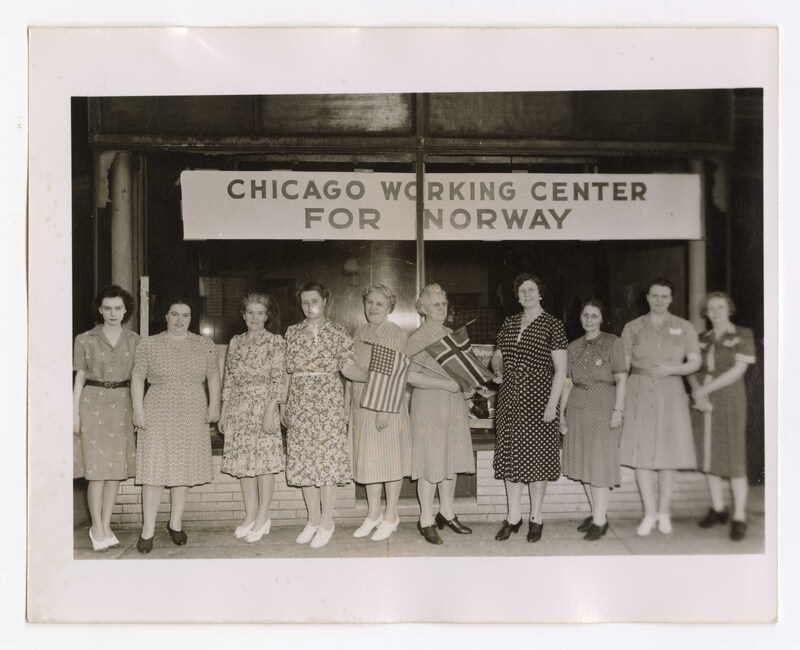
Women played a vital role in supporting occupied Norway during World War II, with Hermana Rye Haugan emerging as a key figure in these relief efforts. Married to Reidar Rye Haugan, a journalist and editor of Viking—one of the largest Norwegian-language newspapers in the United States—Hermana was deeply active in Chicago’s Norwegian American community. She served as secretary of the Chicago Working Center for Norway, a sewing and knitting group, and participated in numerous other Norwegian organizations across the city.
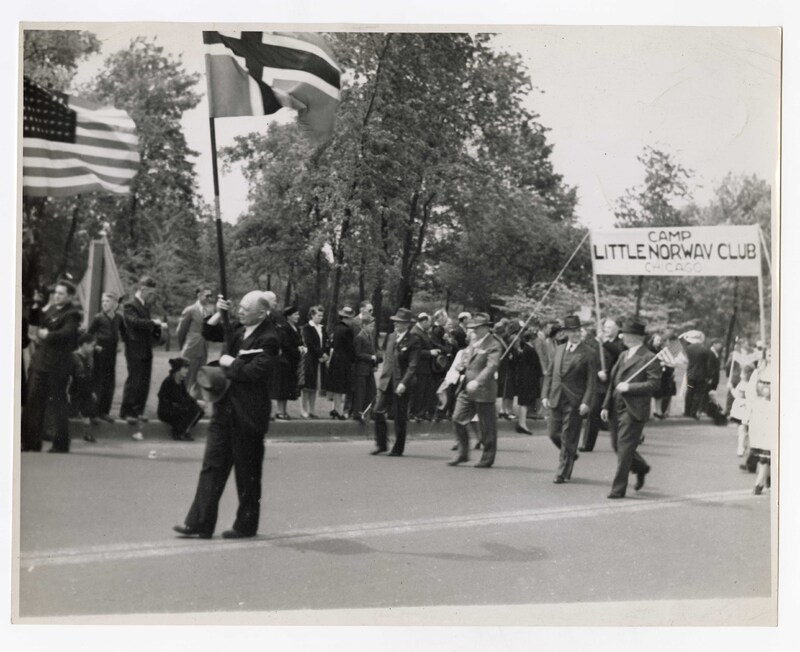
The Camp Little Norway Club of Chicago (CLNCC), established on November 3, 1941, was created to support Camp Little Norway in Toronto by raising funds and gathering supplies for Norway’s armed forces. The Chicago Norske Klub organized fundraising campaigns and charity events, in addition to sewing and knitting efforts. The CLNCC also sold fundraising stamps featuring Prince Harald from the American Friends of Norway to provide medical supplies for Norwegian troops. Over five years, they raised approximately $45,000 for the Norwegian war effort, or nearly $800,000 in today’s dollars.
Wartime Woolens
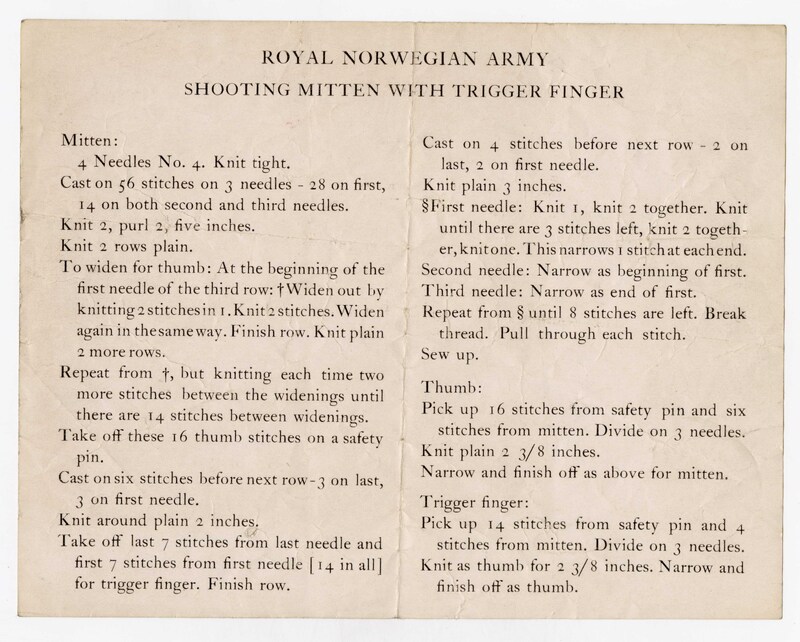
A primary focus for women was knitting woolen items for Norwegian soldiers. Funds raised were partially allocated to purchase yarn, which was then given to knitting groups like the Daughters of Norway lodges, Ladies’ Aid societies, and other local knitting clubs. The Camp Little Norway Club of Chicago sent an impressive number of knitted goods to Camp Little Norway before the organization disbanded in 1946. These included 1,477 pairs of socks; 205 sweaters; 160 scarves, 75 chest warmers; and 67 pairs of wristlets.
Portions of the Hermana Rye Haugan Papers were digitized with grant funding from the National Endowment for the Humanities.