Funding to digitize the O.E. Rølvaag Papers was provided to the Norwegian American Historical Association through the Minnesota Arts and Cultural Heritage Fund, a component of the Minnesota Clean Water, Land and Legacy constitutional amendment, ratified by Minnesota voters in 2008.
Funding to digitize the O.E. Rølvaag Papers was provided to the Norwegian American Historical Association through the Minnesota Arts and Cultural Heritage Fund, a component of the Minnesota Clean Water, Land and Legacy constitutional amendment, ratified by Minnesota voters in 2008.
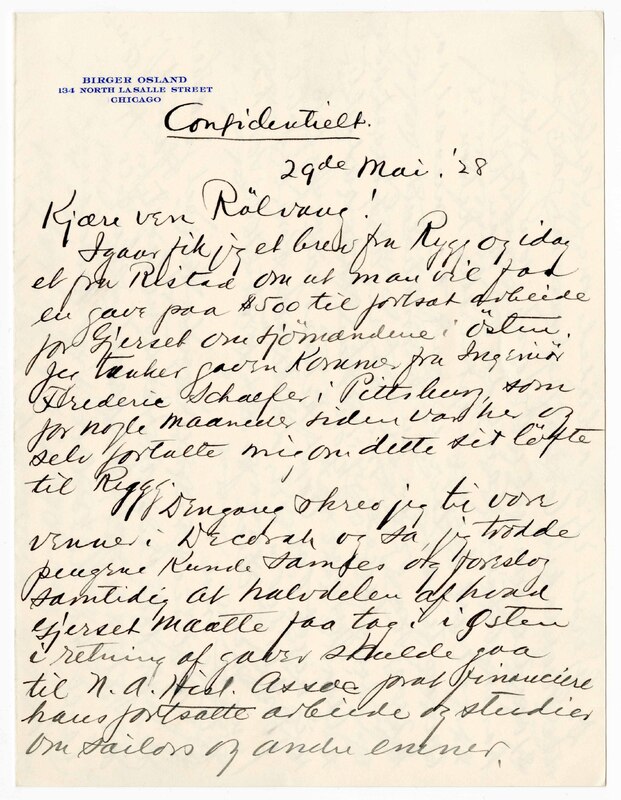
Birger Osland was a Norwegian-born Chicago investment banker, philanthropist, and author. He was an official in various enterprises of Charles H. Wacker (1893-1911); founder and president of Birger Osland and Company, investment bankers (1911-1940); general western manager of the Norwegian America Steamship Line (1911-1923) and for many years a member of its board of representatives. He also served as secretary-treasurer of Lake Otis Groves, Inc.; director of the Scandinavian Trust Company of New York until its merger with New York Trust Company; and vice president of Chicago Security Dealers Association.
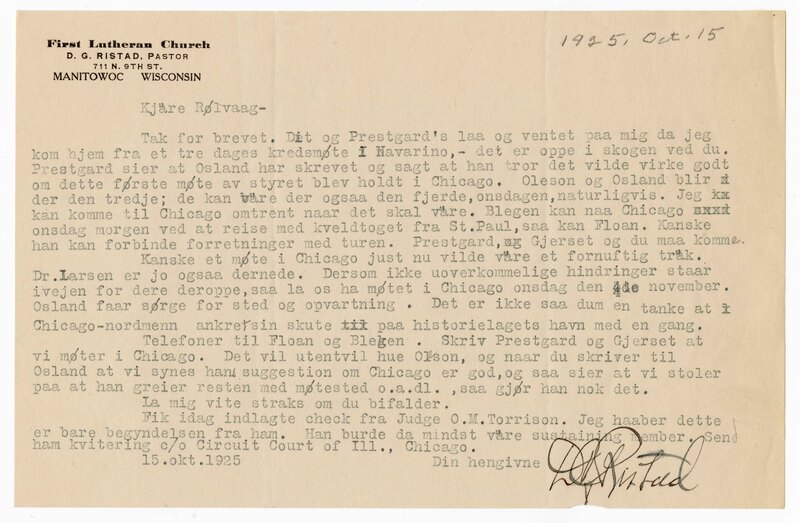
Ditlef G. Ristad was born in Norway in 1863 and came to the United States in 1887. He was naturalized in 1917. He graduated from Luther Theological Seminary in 1892 and studied at the University of Chicago, and did further study and travel in Europe.
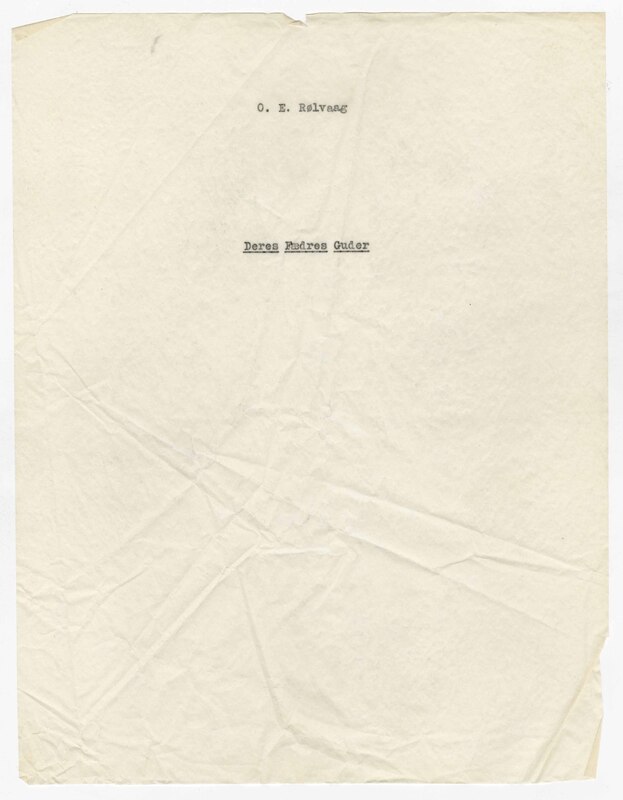
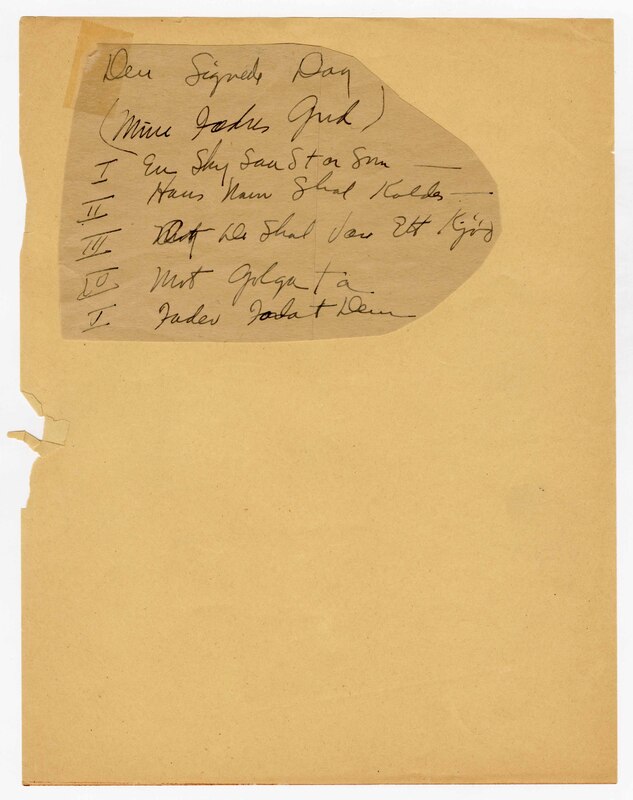
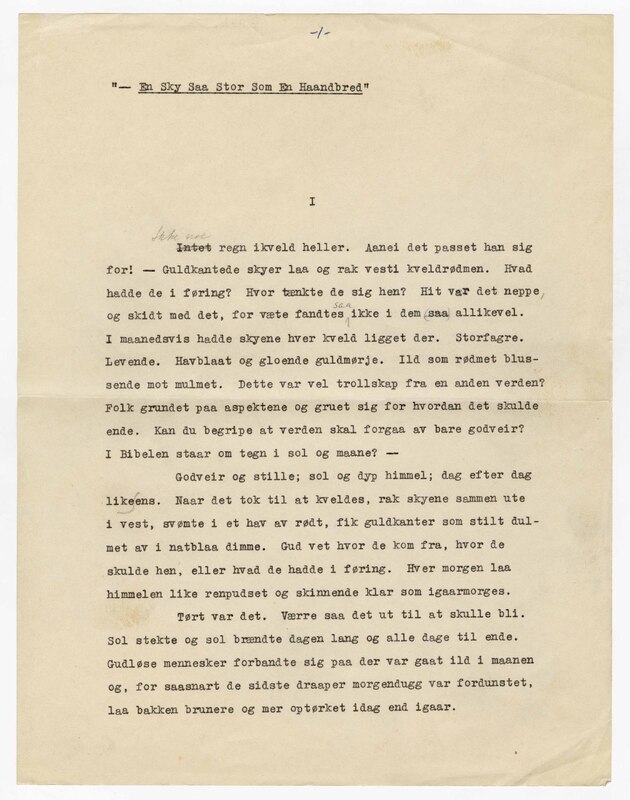
Translated as Their Father’s God, this final novel from Rølvaag’s pen continues the story of Beret, Peder, and Susie and shows how Peder’s rejection of his cultural heritage affects every aspect of his life. The community they live in is divided and these divisions of language, customs, religion, and politics affect the marital relationship between Peder and Susie. The community suffers a drought, Susie suffers a miscarriage, Beret dies, Peder’s political ambitions fail, and in the end Susie takes their child and leaves him. In this novel Rølvaag portrays the development of a new society and gives an accurate description of the political shenanigans of the period.
Translated as Their Father’s God, this final novel from Rølvaag’s pen continues the story of Beret, Peder, and Susie and shows how Peder’s rejection of his cultural heritage affects every aspect of his life. The community they live in is divided and these divisions of language, customs, religion, and politics affect the marital relationship between Peder and Susie. The community suffers a drought, Susie suffers a miscarriage, Beret dies, Peder’s political ambitions fail, and in the end Susie takes their child and leaves him. In this novel Rølvaag portrays the development of a new society and gives an accurate description of the political shenanigans of the period.
Translated as Their Father’s God, this final novel from Rølvaag’s pen continues the story of Beret, Peder, and Susie and shows how Peder’s rejection of his cultural heritage affects every aspect of his life. The community they live in is divided and these divisions of language, customs, religion, and politics affect the marital relationship between Peder and Susie. The community suffers a drought, Susie suffers a miscarriage, Beret dies, Peder’s political ambitions fail, and in the end Susie takes their child and leaves him. In this novel Rølvaag portrays the development of a new society and gives an accurate description of the political shenanigans of the period.
Funding to digitize the O.E. Rølvaag Papers was provided to the Norwegian American Historical Association through the Minnesota Arts and Cultural Heritage Fund, a component of the Minnesota Clean Water, Land and Legacy constitutional amendment, ratified by Minnesota voters in 2008.
Funding to digitize the O.E. Rølvaag Papers was provided to the Norwegian American Historical Association through the Minnesota Arts and Cultural Heritage Fund, a component of the Minnesota Clean Water, Land and Legacy constitutional amendment, ratified by Minnesota voters in 2008.
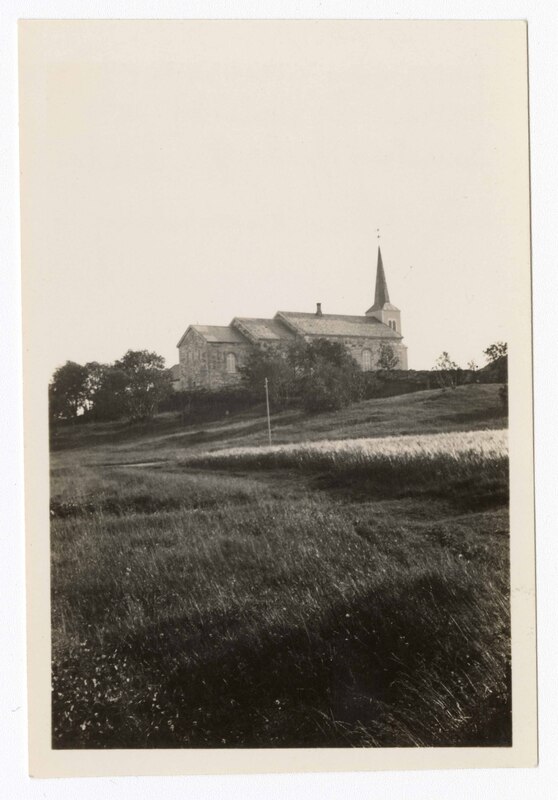
Caption on the back reads: "Taken by Valborg on Sunday, July 9 late in the evening. Part of this church was built in the 12th century, the bell is about 200 years old."