
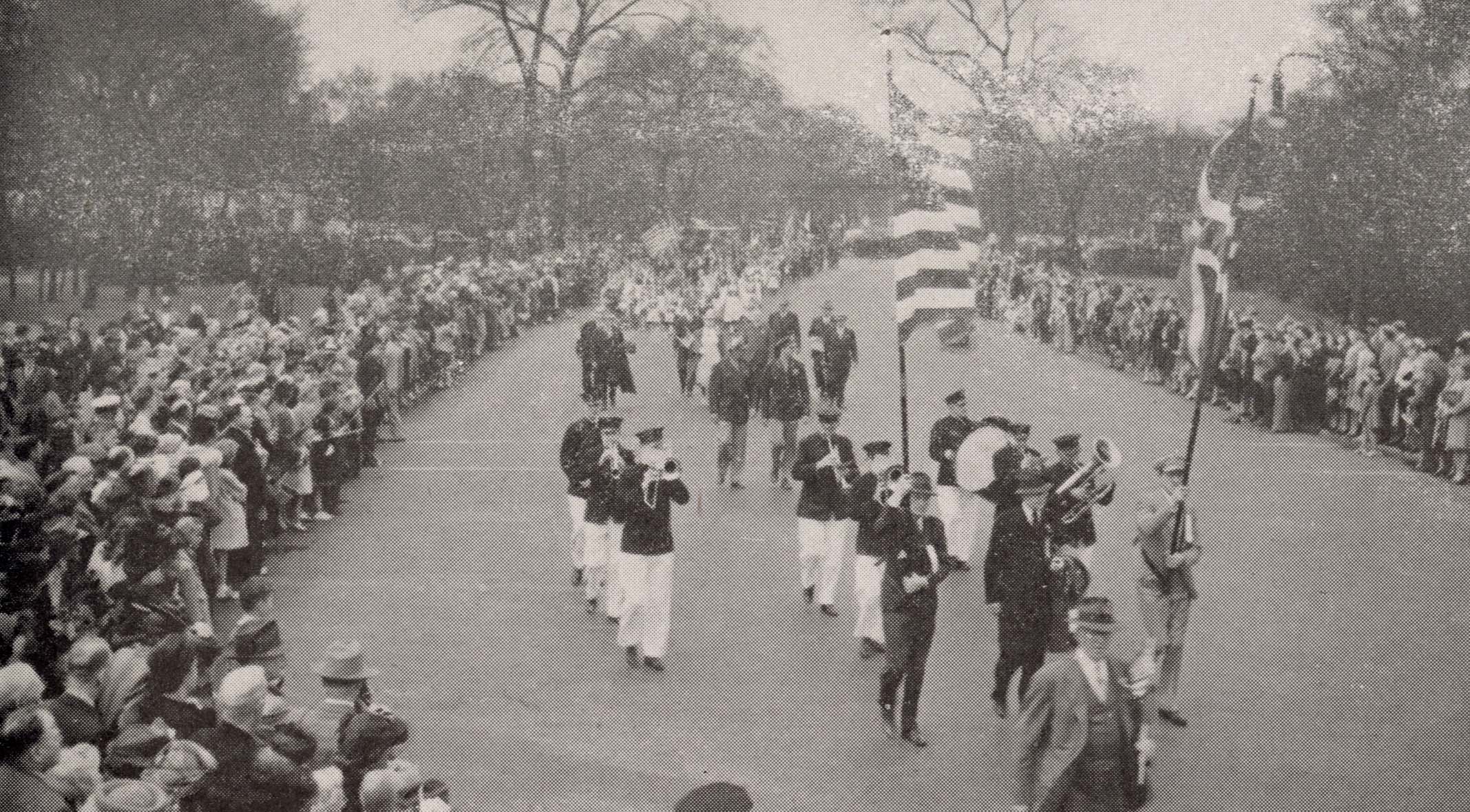
NAHA is excited to share that the Camp Little Norway Association Papers are now accessible online!
This project was originally made possible through funding from the National Endowment for the Humanities. Unfortunately, our three-year grant was recently and unexpectedly canceled due to DOGE-related budget cuts. Despite this setback, we remain committed to completing the project so that this important chapter of American and transatlantic history can be preserved and made accessible to researchers everywhere.
Your support can make a difference. Please consider donating today to help us continue this important work.
Organizing from Coast to Coast
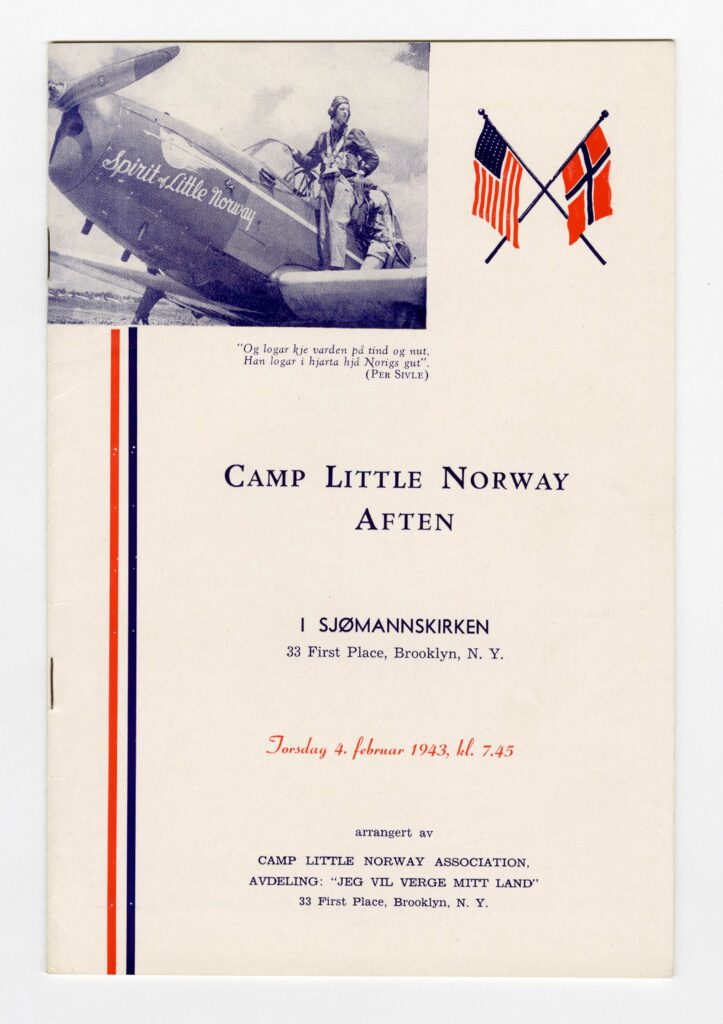
The Camp Little Norway Association Papers document the efforts of thousands of Norwegian Americans to help Norway during WWII. In 1941, a group of American citizens of Norwegian descent visited the Royal Norwegian Air Force’s training facility “Camp Little Norway” in Toronto, Canada. They saw a cause worth fighting for—helping civilians and soldiers affected by the war. This led to the creation of the Camp Little Norway Association, Inc. (C.L.N.A.), dedicated to supporting Norway’s fight for freedom. Through posters, event programs, letters, newspaper clippings, and photographs, this C.L.N.A. collection shows how Norwegian Americans mobilized from coast to coast.
The C.L.N.A. coordinated its activities through local and regional chapters. In addition to its national headquarters in Minneapolis, Minnesota, the association boasted up to 34 chapters during the war years. People joined chapters on the East Coast, such as in New York and Pennsylvania. They organized in the Midwest in Iowa, South Dakota, Michigan, and Illinois. And groups formed on the West Coast, in Washington, California, and even Alaska. As C.L.N.A. leadership wrote: “This emphasis on the local chapters and the living interest in the cause from town to town and village to village kept the cause of fighting Norway before the minds of a considerable part of the American public in the different areas.”
Speakers, Concerts, and Picnics
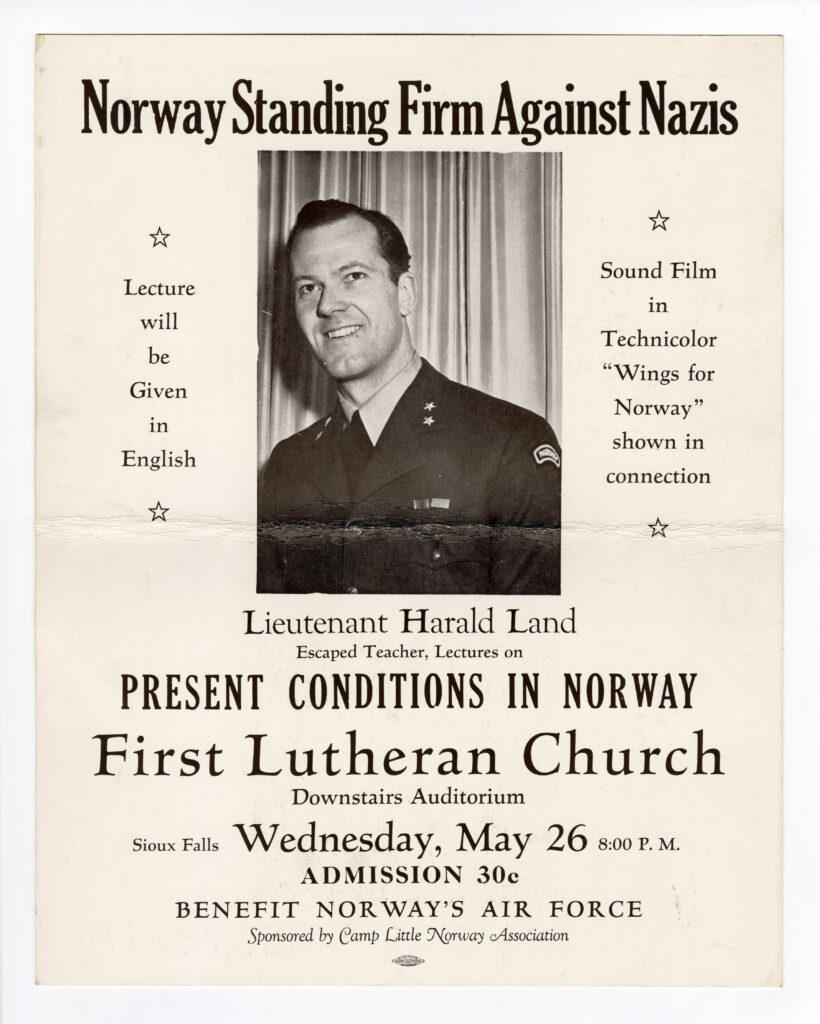
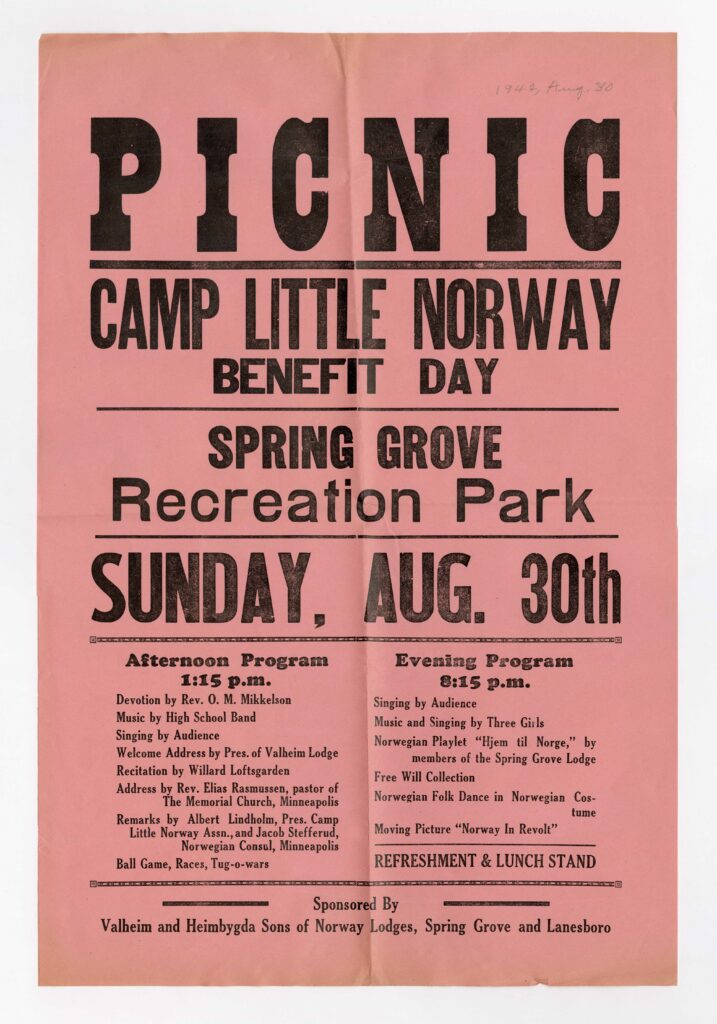
Chapters put on a variety of fundraising activities to encourage support for the Allied cause. Film showings, concerts, dinners, and yearly dues all raised money for Norwegian soldiers. Norwegian speakers also traveled across the United States to spread the word about Norway’s plight. The South Dakota chapter presented Lieutenant Harald Sandvik of the Norwegian Army for a stop on his lecture tour during the height of the war. Sandvik, who used the alias Harald Land while in the United States, spoke about his underground resistance work in occupied Norway to a church auditorium crowd of almost 500.
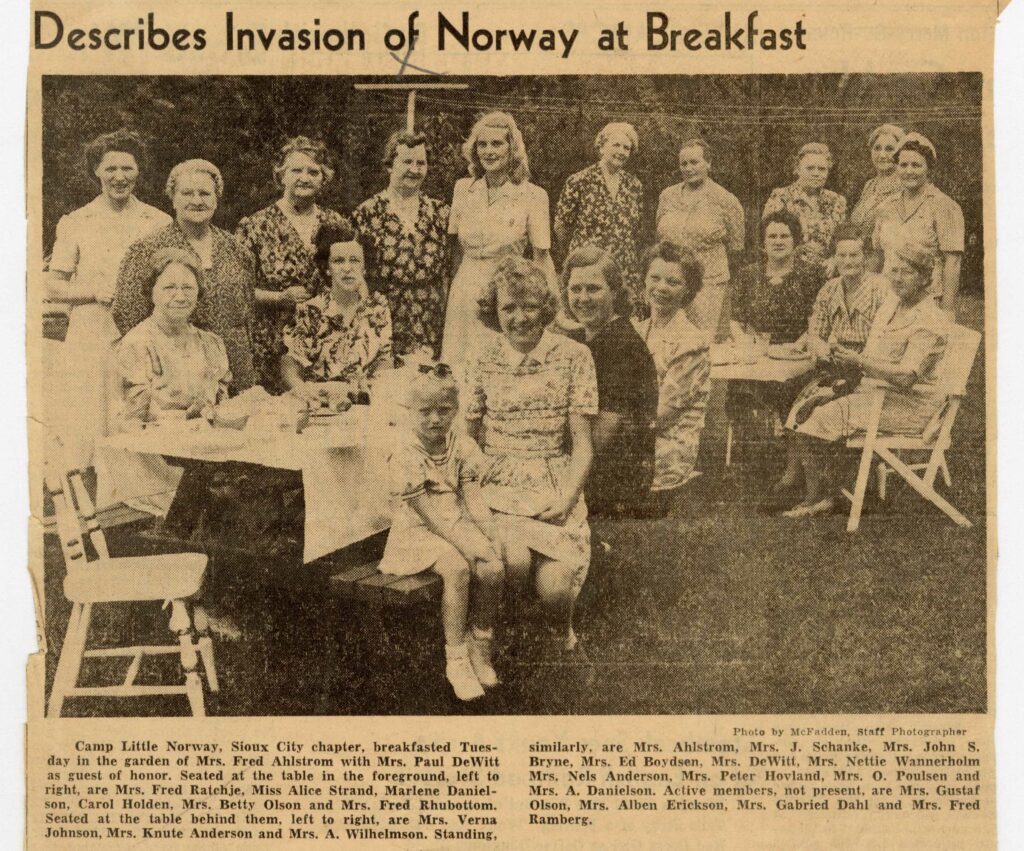
Women as well as men held leadership positions within C.L.N.A. chapters and organized events in their hometowns. In the summer of 1943, the Sioux City, Iowa chapter made the local newspaper when they hosted the Norwegian journalist Else DeWitt at a breakfast meeting. Over a dozen women, including the chapter’s president Martha Boydson and vice president Betty Olson, gathered to hear DeWitt’s story. They also planned other clothing drives, meals, and dances to raise funds.
Through the C.L.N.A., people of Norwegian descent living in all parts of the United States worked together across vast distances. The C.L.N.A. put on approximately 230 lectures and 238 film showings to reach audiences of at least 129,000 people. And all of their hard work paid off. By the time the C.L.N.A. dissolved at the end of 1946, the organization had raised over $330,000 for relief work.
About the National Endowment for the Humanities
Created in 1965 as an independent federal agency, the National Endowment for the Humanities supports research and learning in history, literature, philosophy, and other areas of the humanities by funding selected, peer-reviewed proposals from around the nation. Additional information about the National Endowment for the Humanities and its grant programs is available at: www.neh.gov.

Any views, findings, conclusions, or recommendations expressed in this archival work do not necessarily represent those of the National Endowment for the Humanities.