

For the waves of immigrants in the era of mass migration, forming or joining organizations and societies offered solutions to problems, support for important causes, and a social network. These organizations also helped preserve their native language and customs. In addition to helping immigrants adjust to a new culture, clubs and organizations provided replacements for the familiar aspects of their former lives: the social norms, family connections, and neighborly support of their communities in the homeland. Today, many of these same organizations exist to preserve Norwegian American heritage, culture, and maintain ties to Norway.
Rapid growth of cities brought a number of social issues, and organizations sprang up to help. In addition to mutual aid societies, Norwegian immigrants worked to combat poverty, vice, and other problems in their communities. Norwegian-Americans created benevolent societies, establishing hospitals, homes for women, and orphanages. Women played an important role in this work, particularly those from the urban middle class. Many women were also involved in the temperance movement, promoting abstinence from alcohol as a way to strengthen families and address social problems.
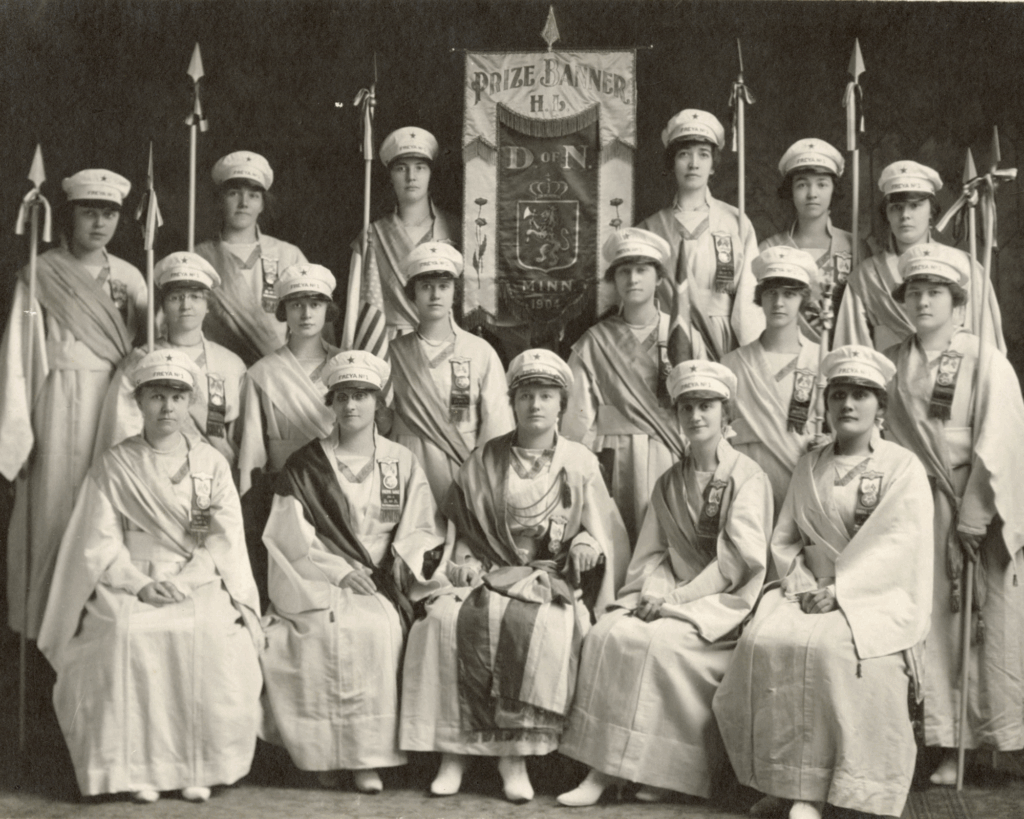
Sons of Norway and Daughters of Norway Papers (P0591)
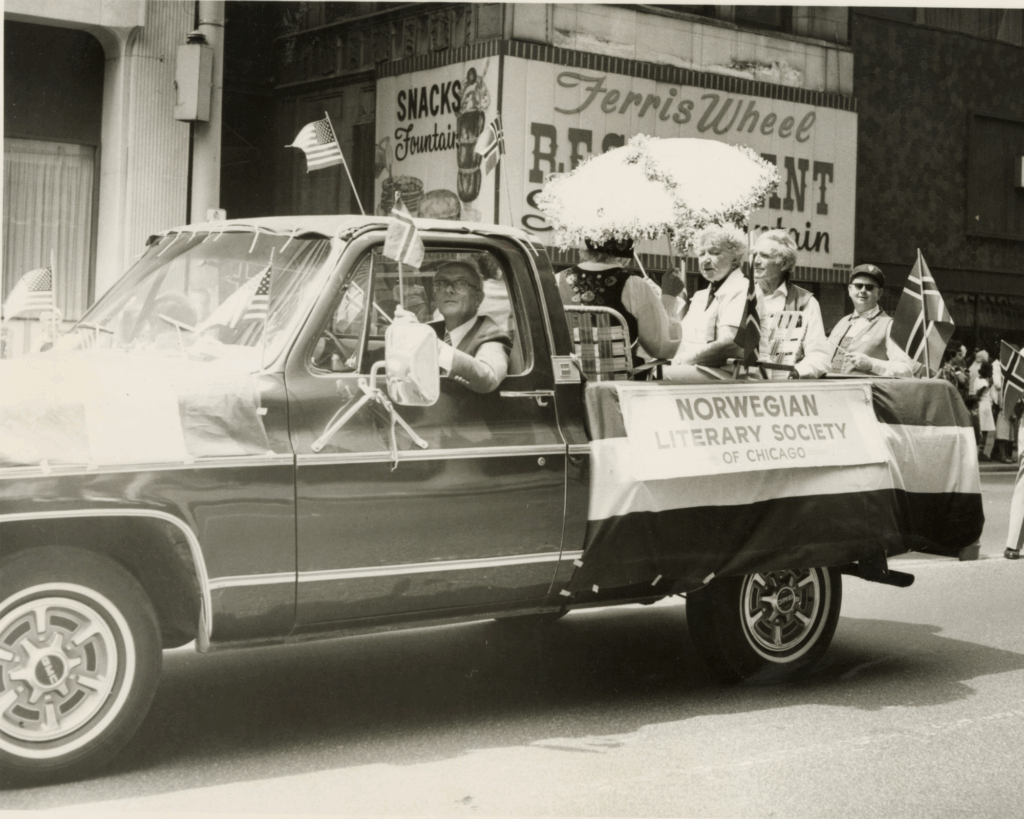
Norwegian American Artist Lars Fletre is featured on the back of the truck (far left).
Norwegian Literary Society of Chicago Records (P0279)
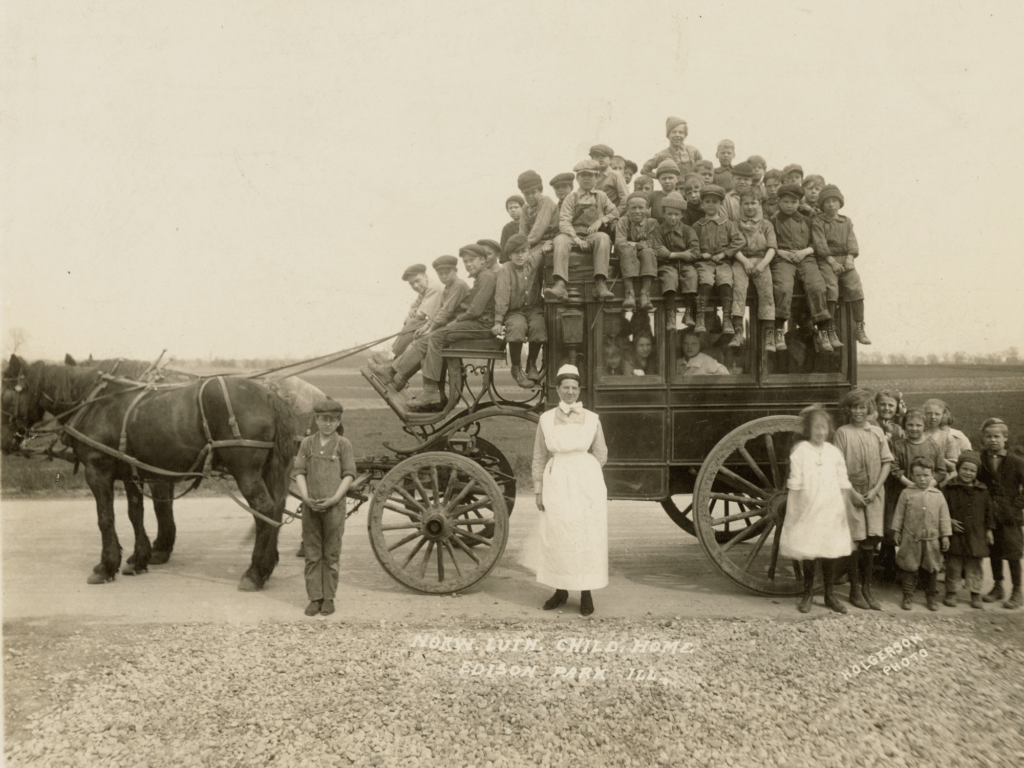
Norwegian Lutheran Children’s Home Society Papers (PO635)
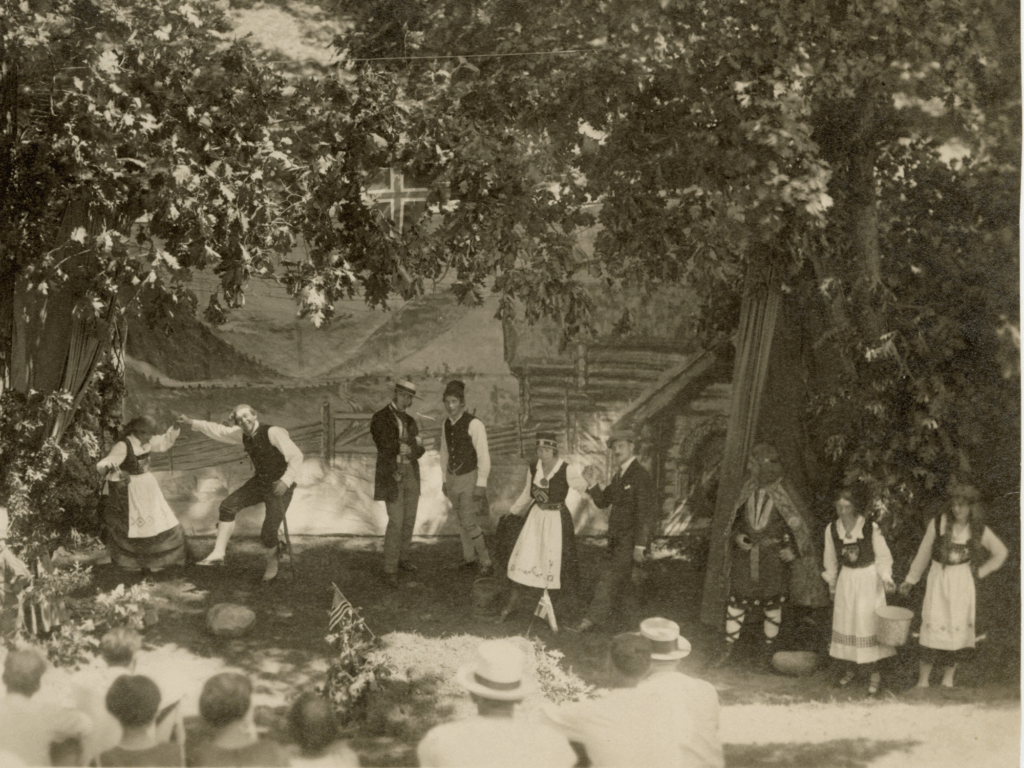
Norwegian Clubs of Chicago Collection (P0278)
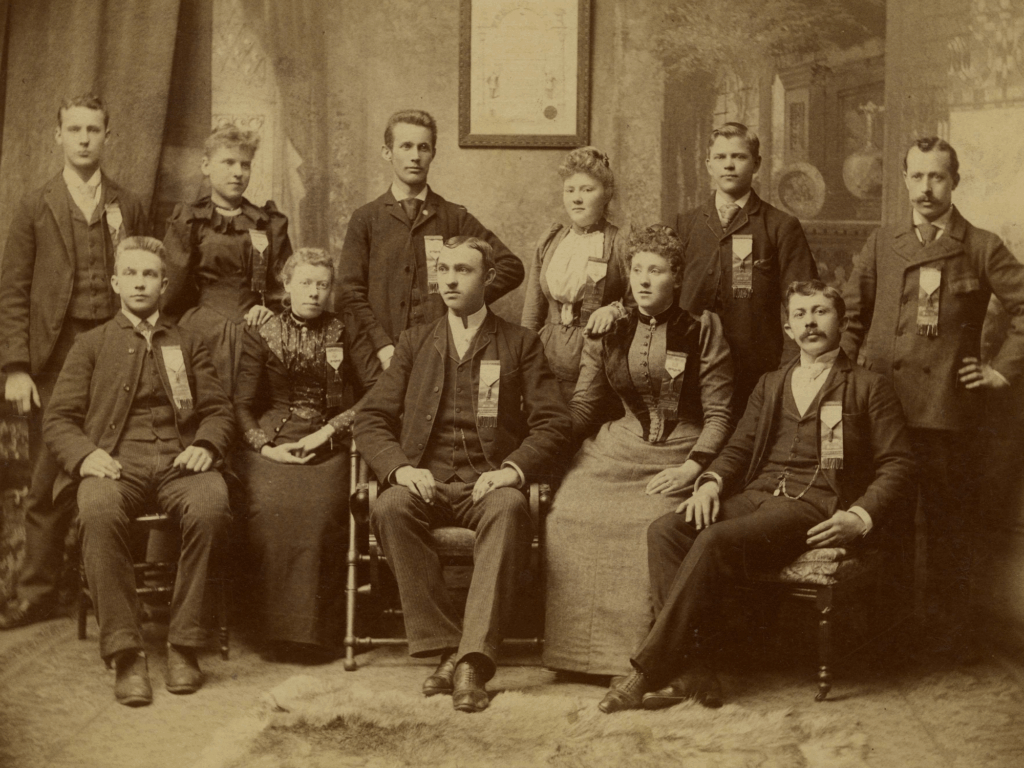
Identified in this picture are Gustav Eide, who later moved to the Midwest and lived in Minneapolis (back row, third from left), and John Figved, who came west and settled in Milwaukee (front row, first from left).
Temperance Movement Papers (P0594)
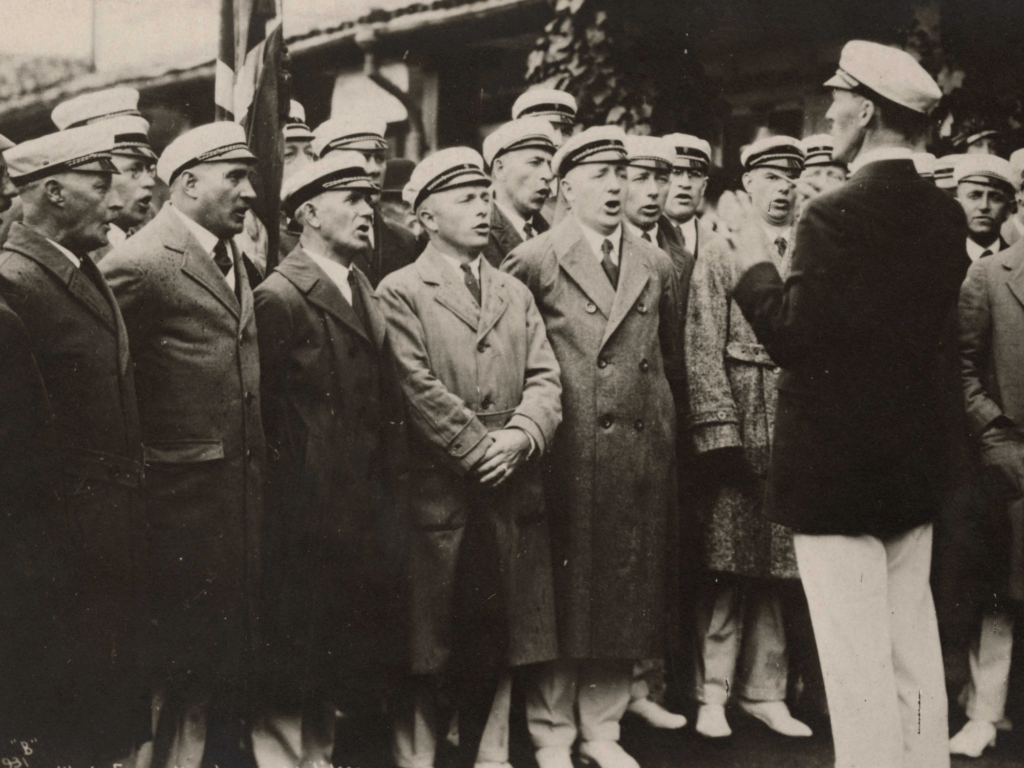
Carl G. O. Hansen Papers (P0543)
Between 1870 and 1910, fraternalism thrived in America. In 1895, eighteen men in North Minneapolis founded the Sons of Norway to support each other with unemployment and funeral benefits. Membership was initially limited to morally upright, healthy Norwegian men aged 20–50. The group quickly grew into the largest secular organization in Norwegian America. Despite a post–World War I decline, the Sons of Norway expanded, reaching over 100,000 members in the U.S., Canada, and Norway by the 1980s. A similar group, the Norwegian Society Nora, formed in Chicago in 1860 and merged with the Sons of Norway in 1938. The Daughters of Norway, formed in Minneapolis in 1897, offered a supportive community for women, especially before Sons of Norway began admitting women to their ranks after 1910.
The National Council of Norwegian-American Bygdelag (regional heritage societies) in the United States, or Bygdelagenes Fellesraad, was founded in 1916. It played a vital role in preserving Norwegian immigrants’ regional heritage by connecting them to their ancestral roots and fostering cultural traditions. Today, the bygdelag still consists of regional groups for Norwegian Americans seeking to understand their roots and sustain a connection to Norway through genealogy, cultural preservation, and community-building, ensuring that Norwegian traditions endure in North America.
Norwegian immigrants brought their love of nature and sports with them to their new homelands. In addition to physical benefits, the sporting clubs offered Norwegian immigrants a way to make friends and preserve cultural pastimes. Societies based on music, art, and literature filled a similar role in immigrant life.
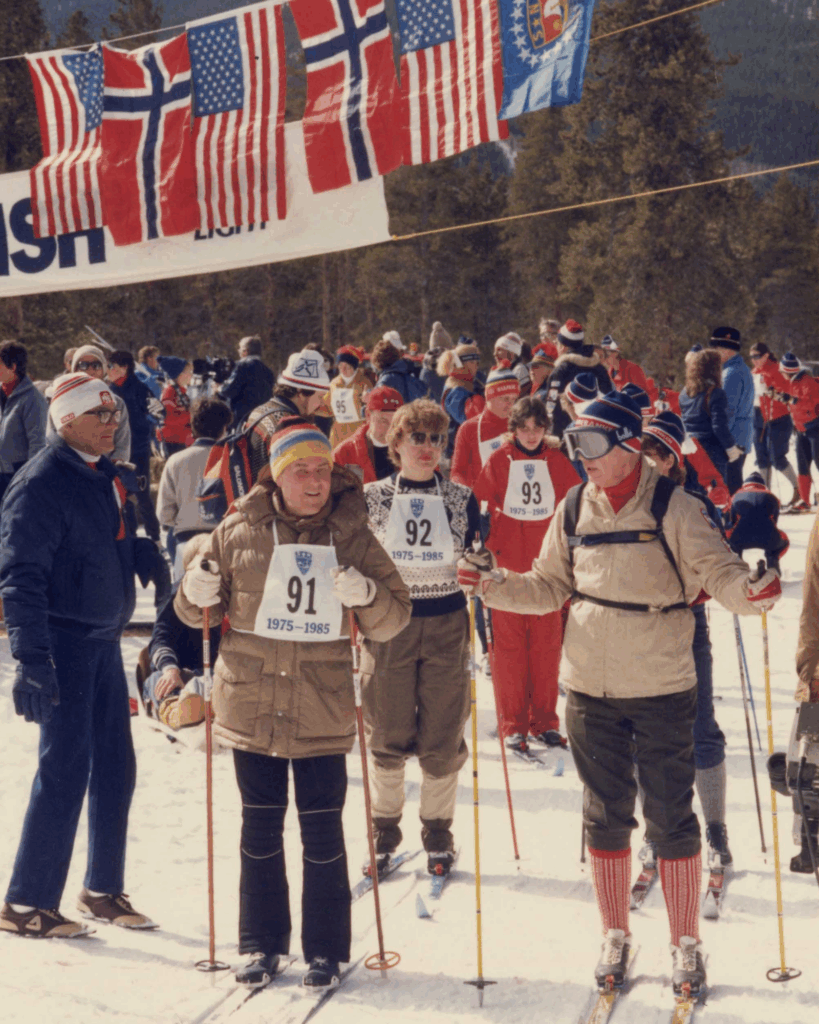
Ski for Light Records (P1722)
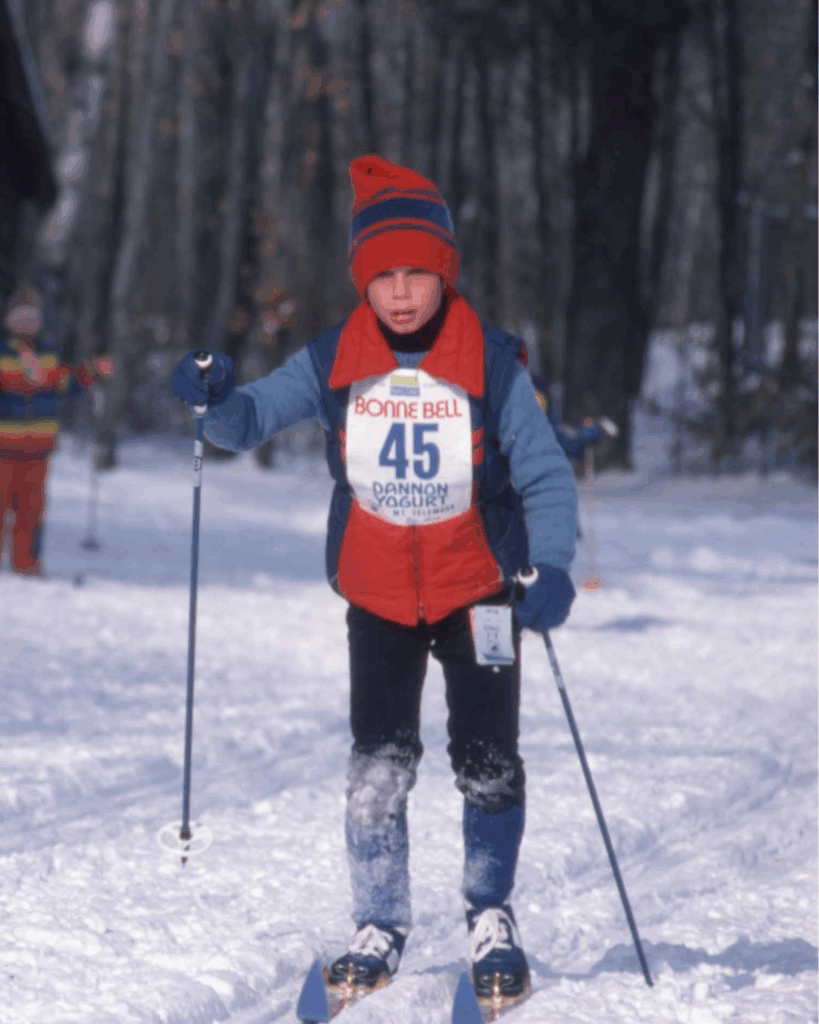
American Birkebeiner Ski Foundation Records (2020/014)
Norwegian Glee Clubs have played a significant role in preserving Norwegian choral music and cultural traditions. These male choral groups, inspired by Norwegian singing societies, were founded by immigrants in the late 19th and early 20th centuries. Today, they continue to provide a social and cultural outlet to celebrate Norwegian American musical heritage. Other musical organizations have flourished, including the Hardanger Fiddle Association of America (HFAA), dedicated to promoting and preserving the Hardanger fiddle (hardingfele) tradition. Founded in 1983, the HFAA connects musicians, dancers, and enthusiasts who are passionate about this unique Norwegian folk instrument, the national instrument of Norway.