

Stewards and Scholars
The Norwegian American Historical Association (NAHA) was founded in the wake of the Norse-American Centennial—commemoration that became a pivotal moment of cultural identity-building for Norwegian America. From its inception on October 6, 1925, NAHA has been headquartered at St. Olaf College, where it remains today. Now a century old, this independent, nonprofit organization is supported by more than 1,000 members from across the United States, Canada, and Norway.
NAHA’s founders were driven by a desire to move beyond the sentimental myths and hero-worship of early immigrant narratives. They sought instead a more rigorous, scholarly approach to preserving and interpreting the Norwegian American experience. Their vision gave rise to a remarkable archive, dedicated to capturing and protecting the lived stories of Norwegian immigrants. Among NAHA’s early leaders were influential figures such as novelist and professor O.E. Rølvaag, historian Knut Gjerset, journalist Kristian Prestgard, and academic Laurence Larson.
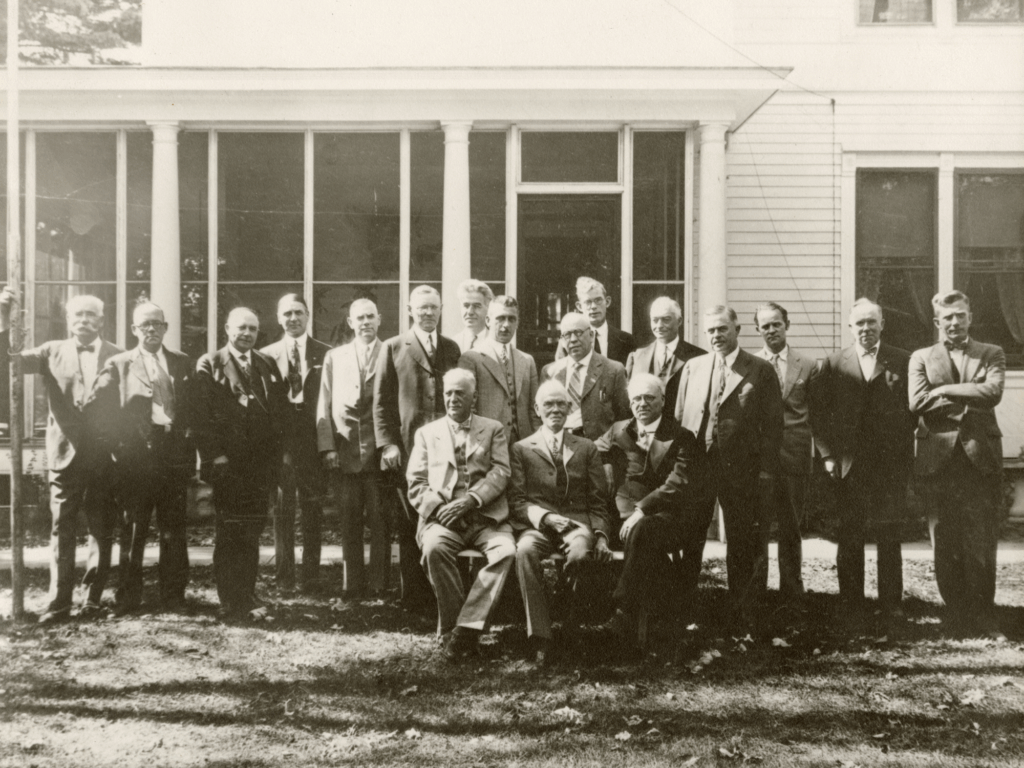
May 26, 1926.
Standing, from left: Kristian Prestgard, O.E. Rølvaag, B. L. Wick, O. Boe, Oscar L. Olson, Einar Lund, Sigurd Arneson, T. Stabo, J. M. Rhone, Knut Gjerset, Birger Osland, Georg Strandvold, J. Jørgen Thomson, Theodore C. Blegen. Seated: Sir Karl Knudsen, O. M. Olesen, D. G. Ristad.
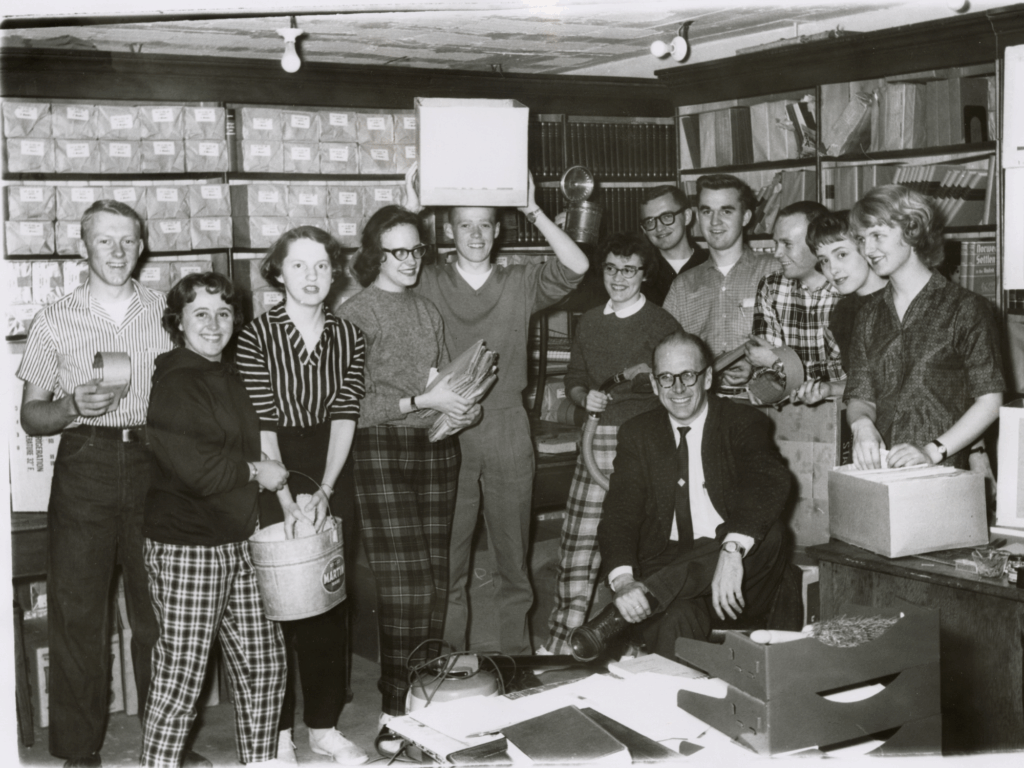
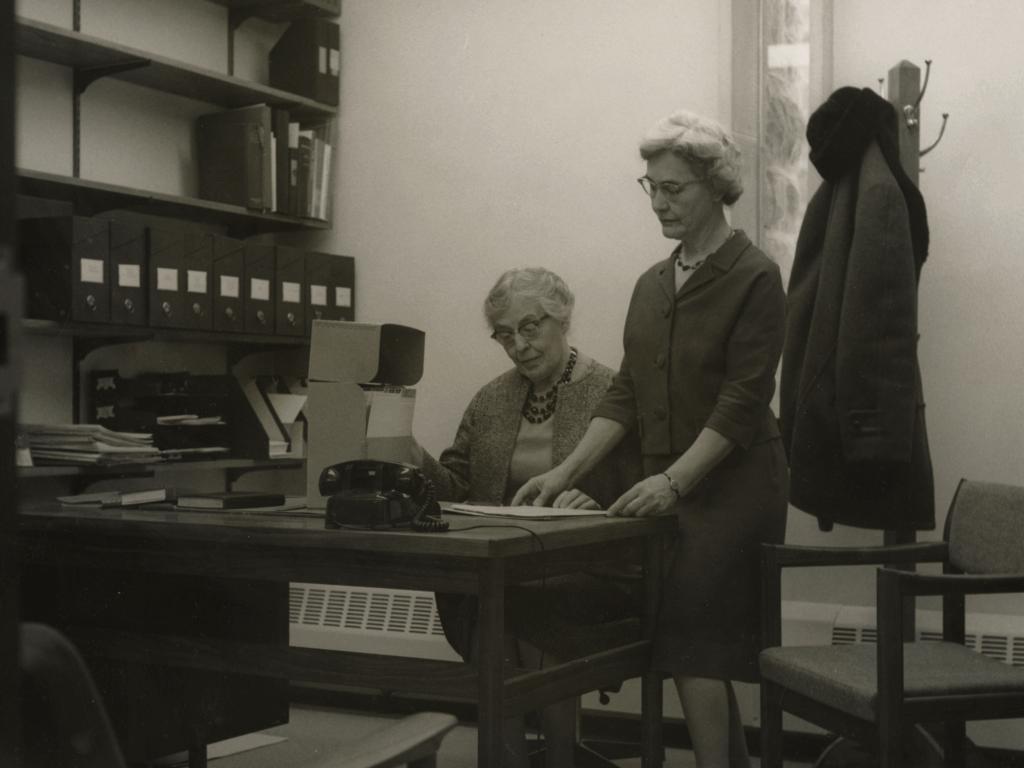
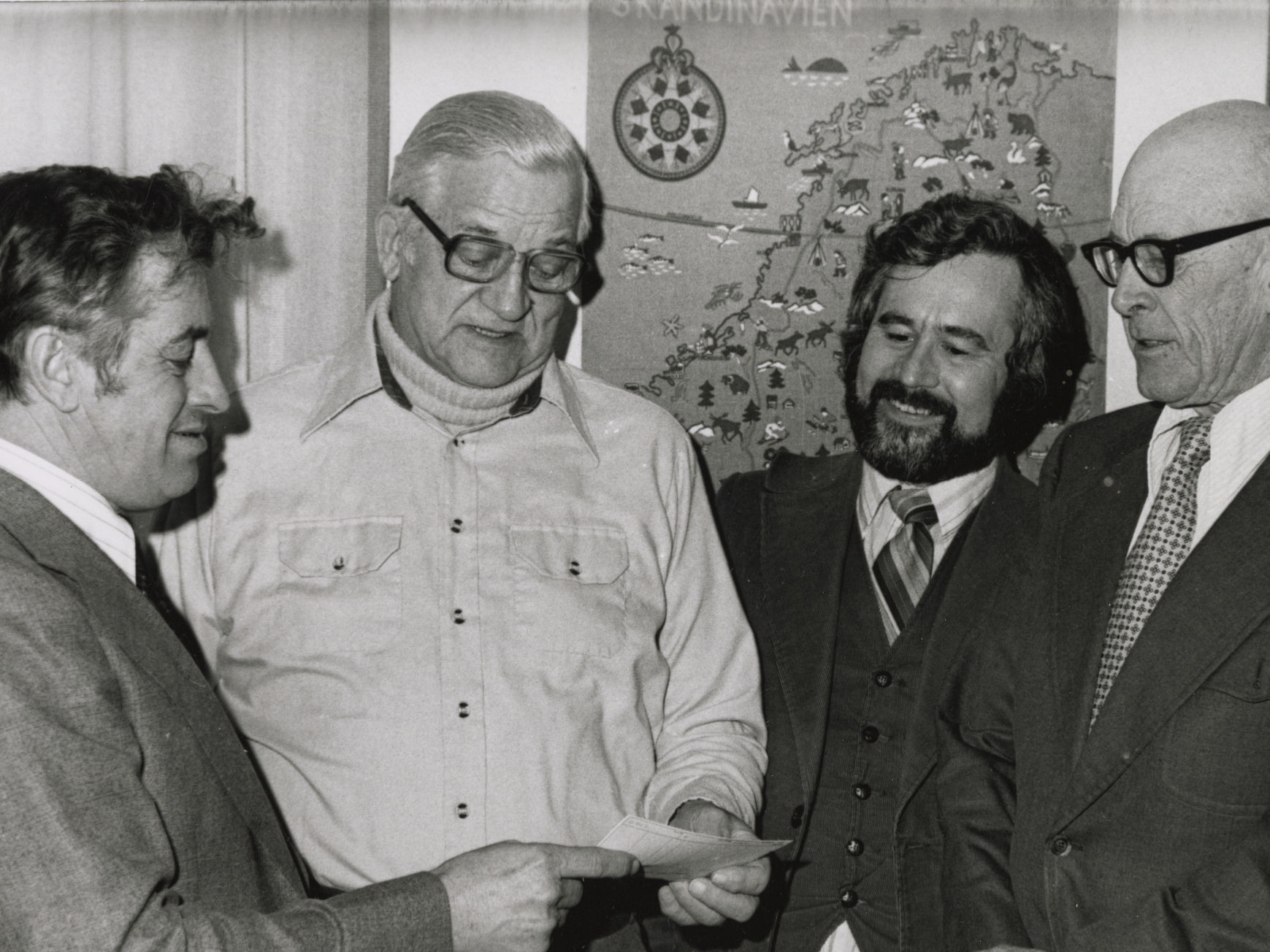
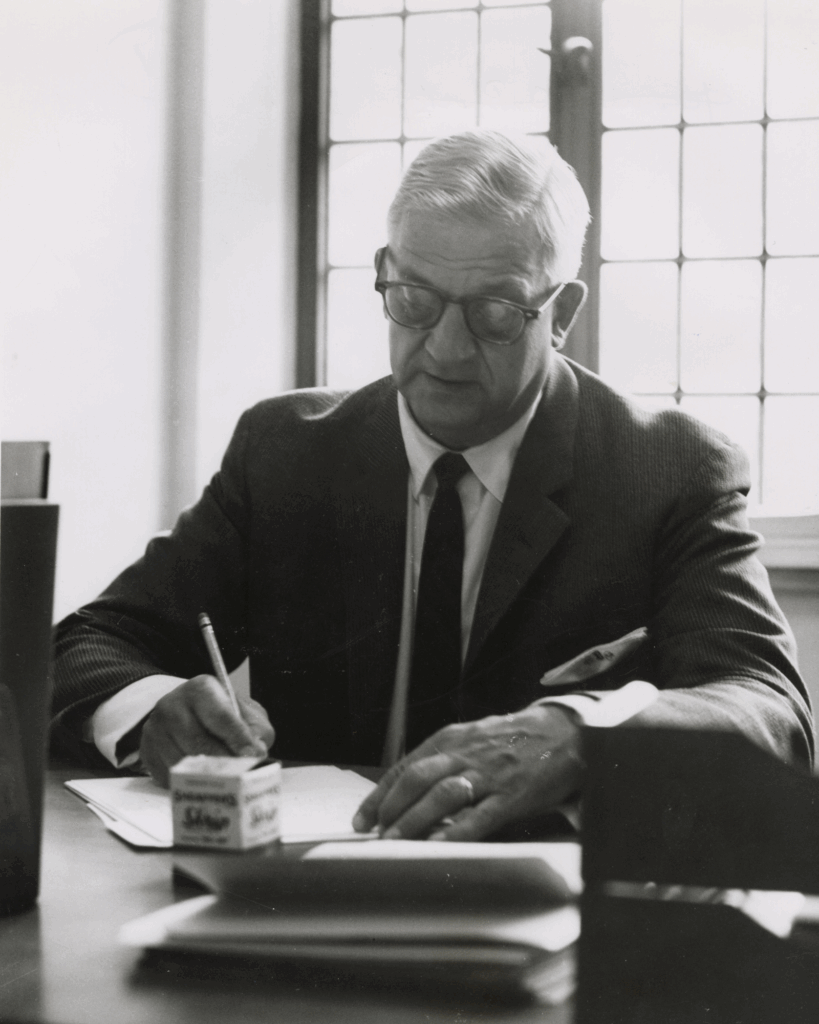
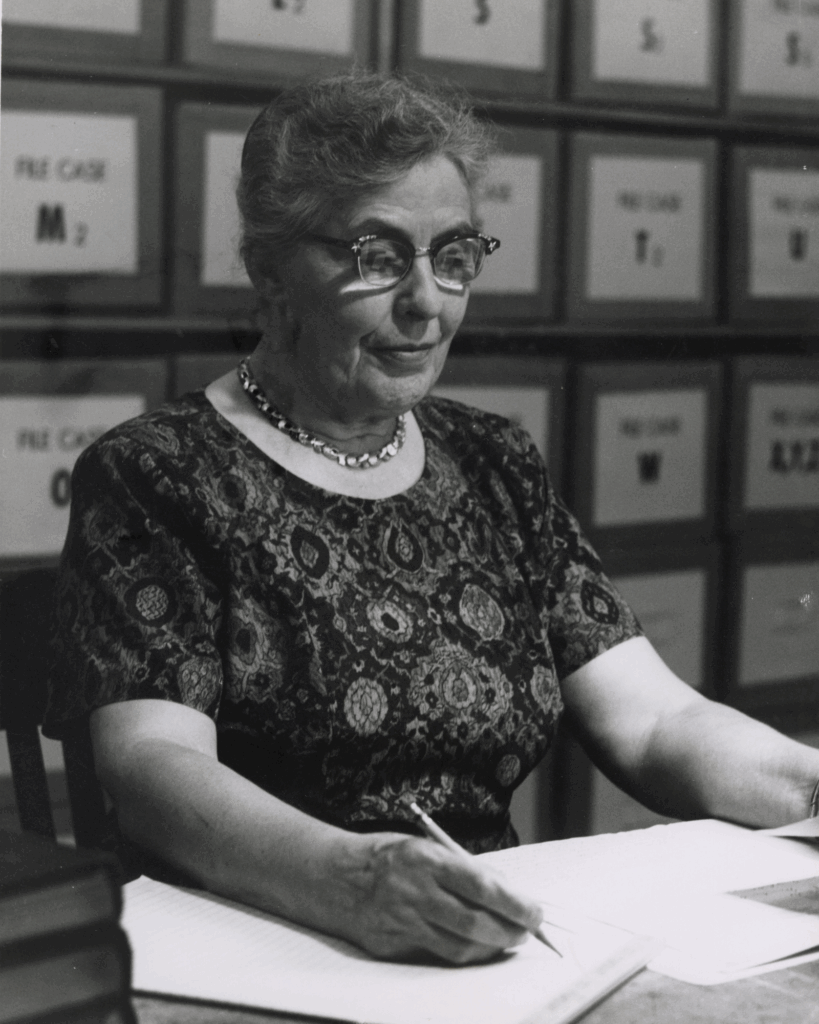
Hustvedt served as the secretary for four decades.
A Century of Publishing
Central to NAHA’s mission was American historian Theodore Blegen, who became the founding editor of the association’s publications. Blegen championed what he called a “grass-roots” approach to history—an emphasis on the everyday lives and voices of immigrants. Rather than spotlighting only the extraordinary, he focused on letters, diaries, and other primary sources to capture the experiences of ordinary men and women navigating the challenges of migration and settlement.
Since 1926, NAHA has published Norwegian-American Studies, a scholarly journal now produced in partnership with the University of Minnesota Press. The journal, along with NAHA’s book publishing program, highlights research in the fields of history, literature, religion, art, and cultural studies. The organization has also played a vital role in amplifying women’s ethnic history, publishing works by and about immigrant women like Aagot Raaen, Gro Svendsen, Elisabeth Koren, and Elise Wærenskjold.
Assembling the Archives
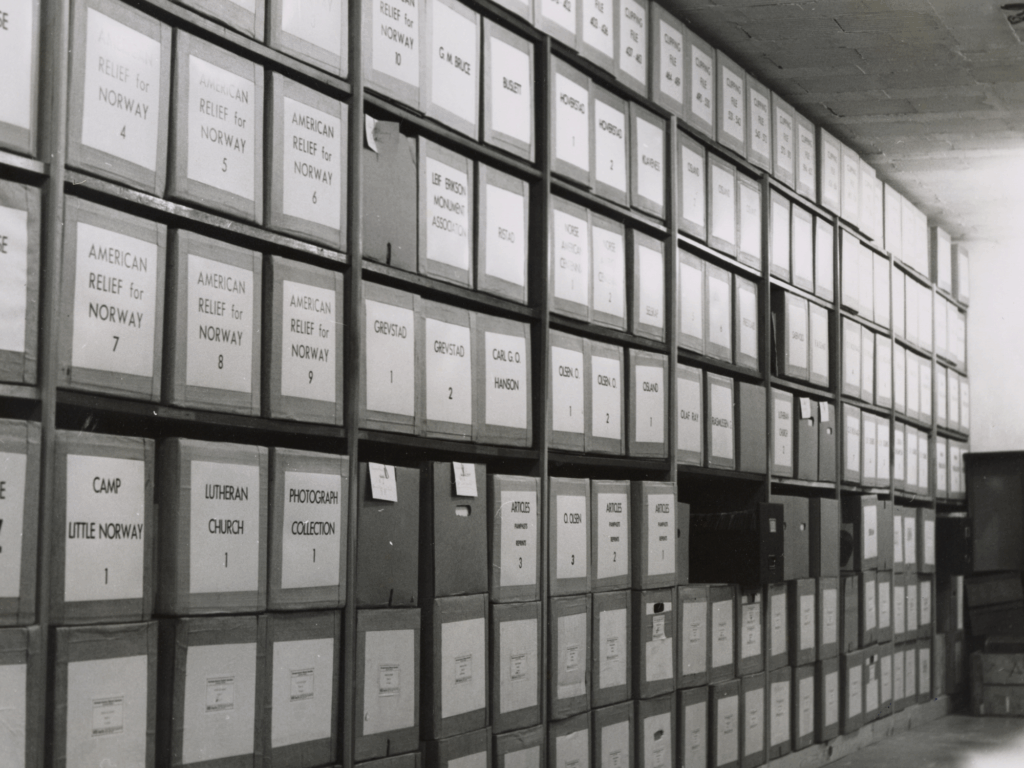
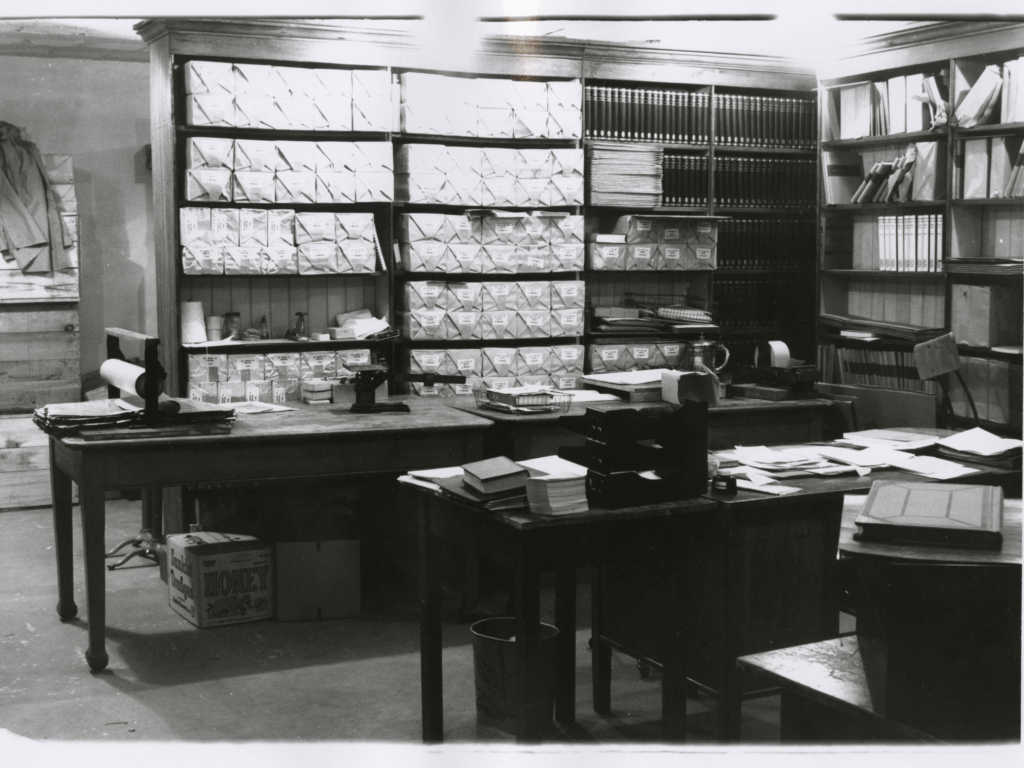
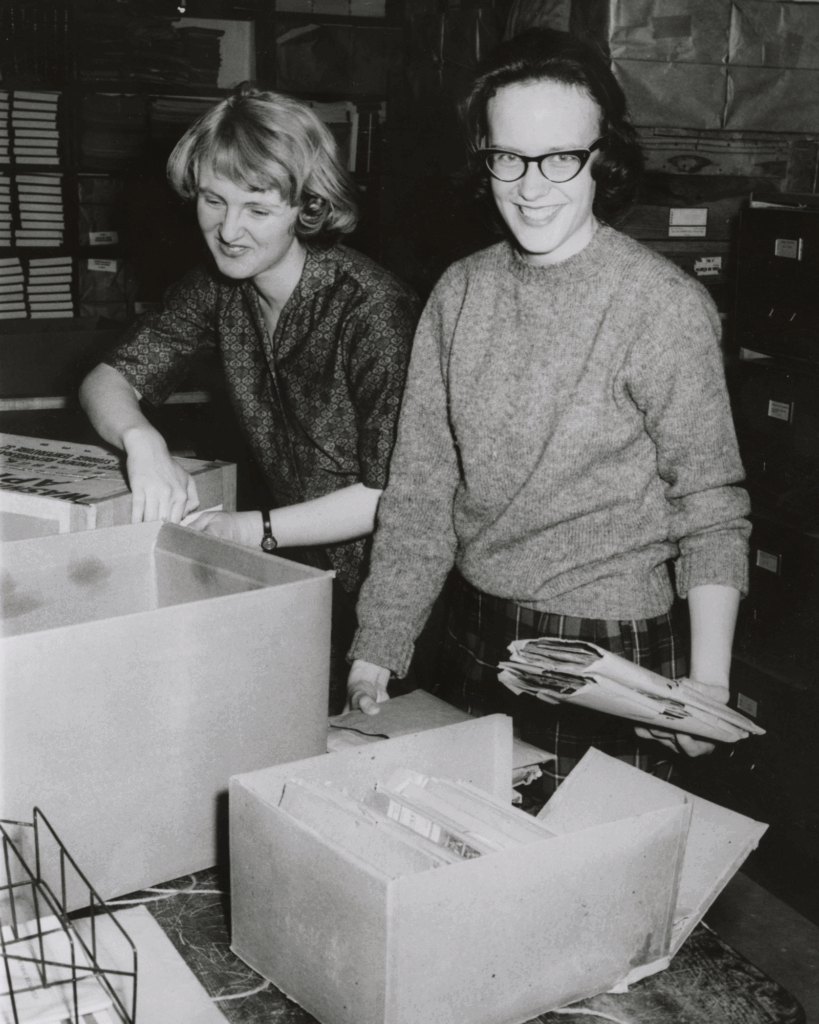
In the summer of 1932, NAHA sent Carlton Qualey, a young graduate student, on a six-week journey throughout the Midwest. Acting as the association’s field agent, he visited immigrant communities, collecting the materials that would become the foundation of the NAHA Archives. These were added to the records already gathered by Rølvaag and Blegen, forming the heart of what is now one of the most comprehensive collections of Norwegian American historical materials.
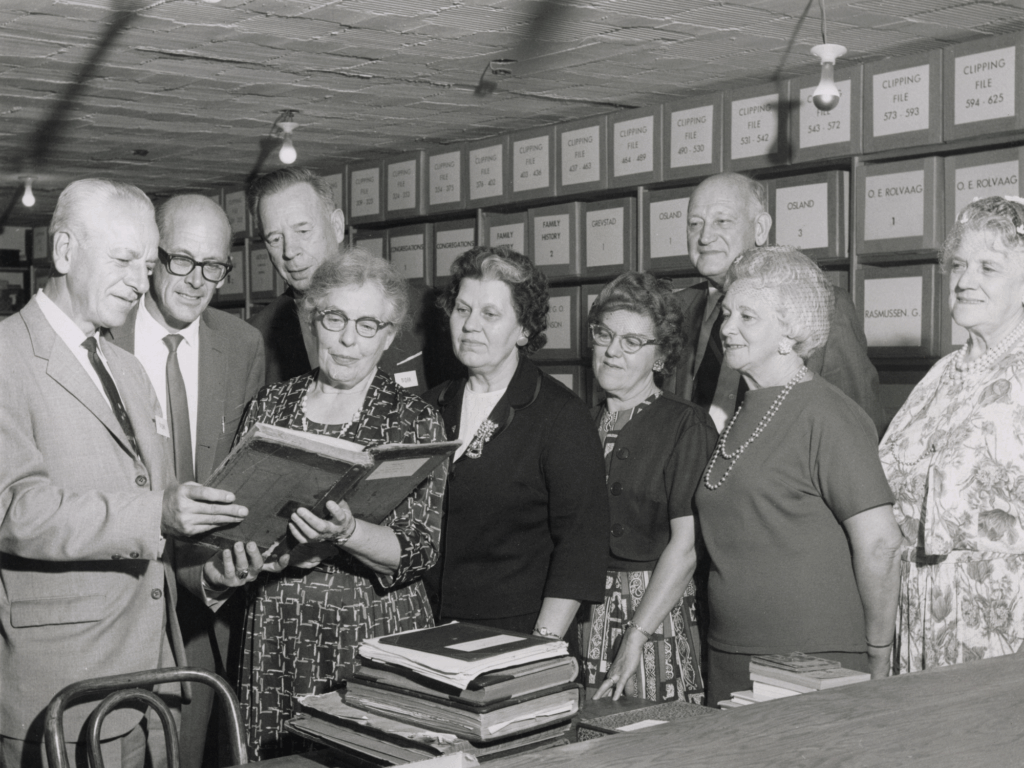
Today, the NAHA Archives house an extraordinary range of resources—letters, ledgers, photographs, diaries, newspapers, and audio-visual recordings—documenting the lives of hundreds of thousands of immigrants, businesses, and institutions. From farm families and domestic workers to diplomats and entrepreneurs, the archive holds the stories that offer a unique and enduring window into the experiences and contributions of Norwegian Americans over the past two centuries.
A special thanks to the Minnesota Arts and Cultural Heritage Fund for providing funding to rehouse and describe the NAHA institutional records provided to the Norwegian American Historical Association!
